

Projektityyny. A mobile-first store launch for a Nordic-inspired textiles brand

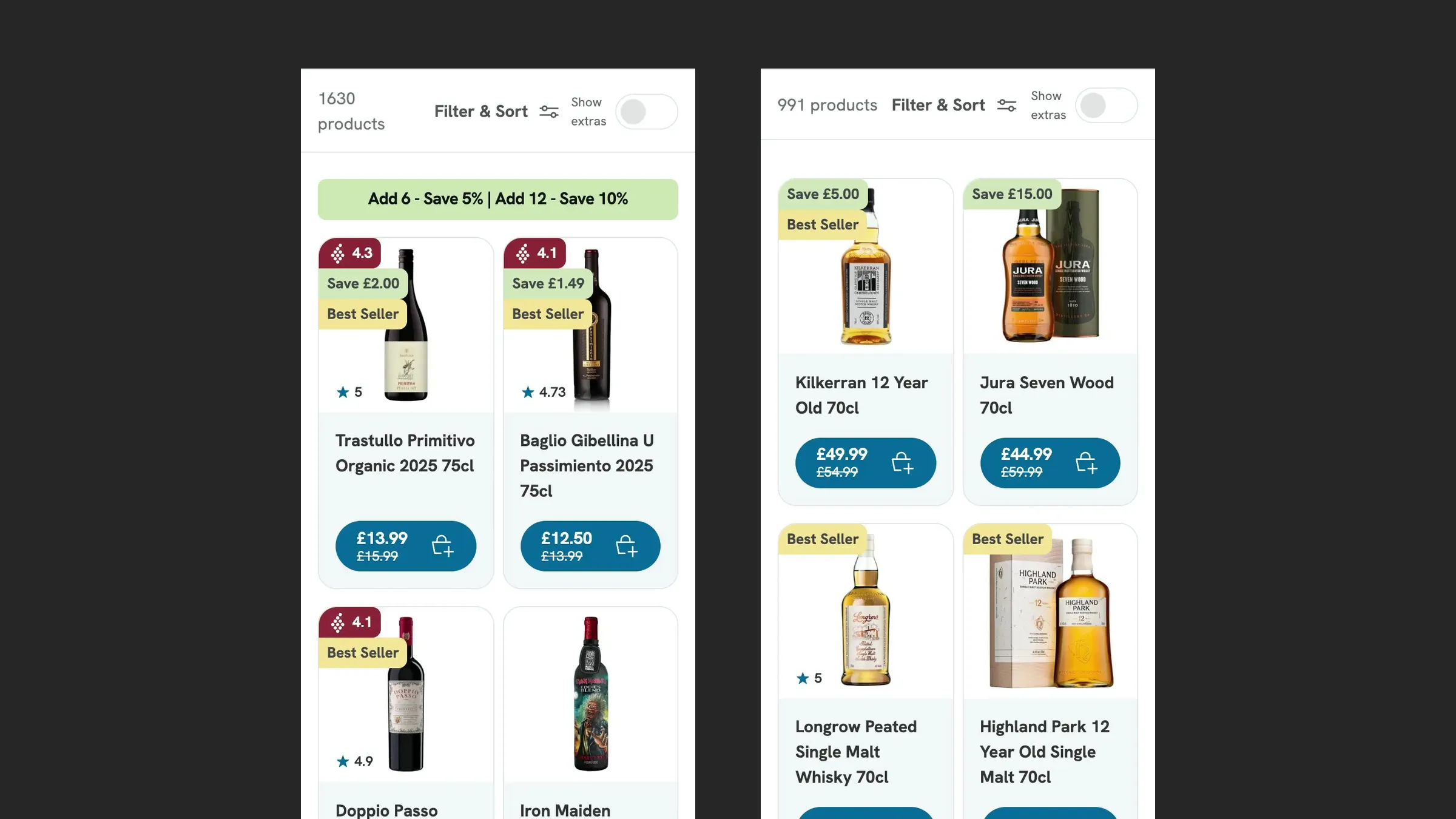
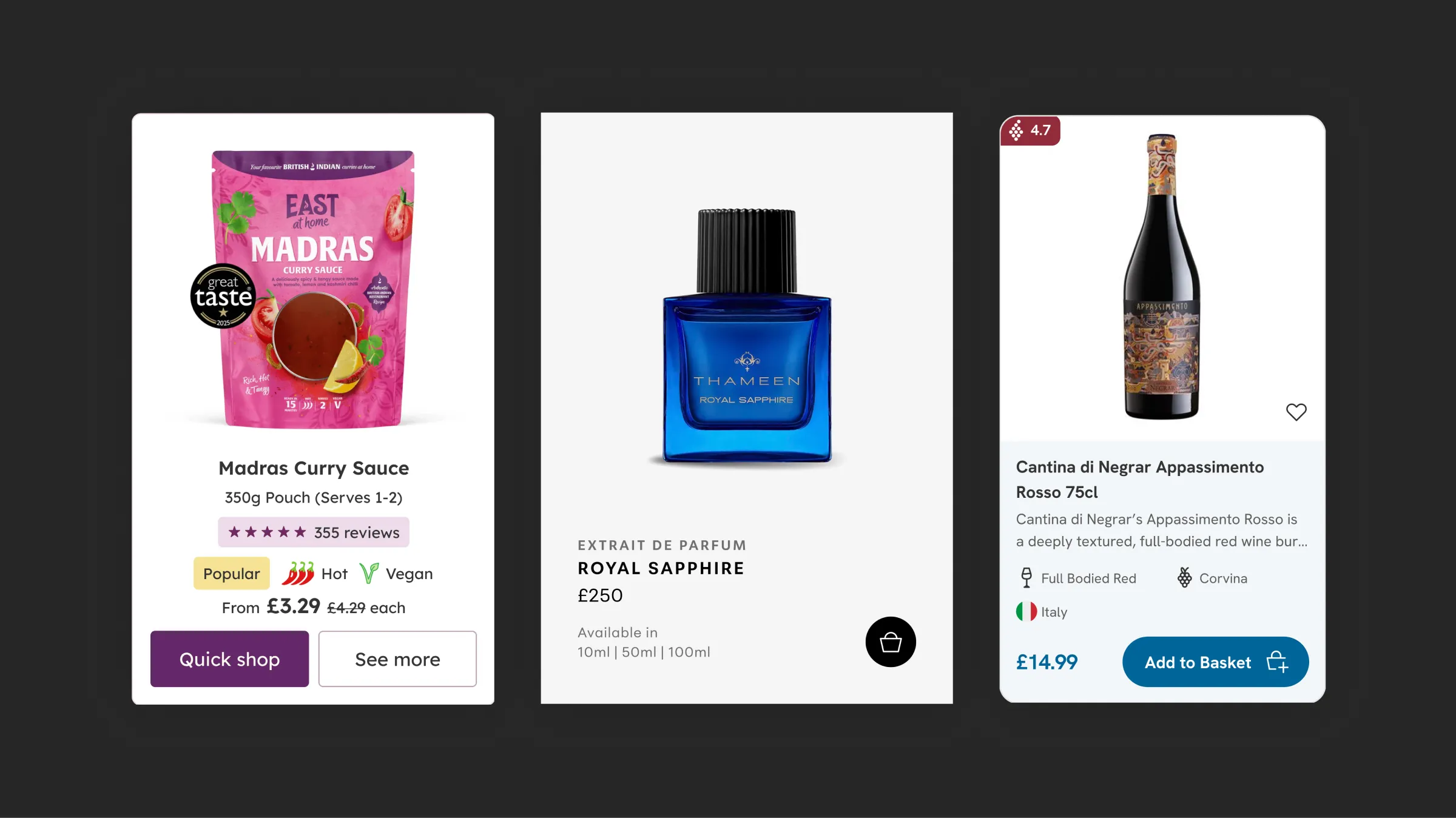
Shopify CRO, short for Shopify conversion rate optimisation, means finding the steps where customers leave your store, redesigning them, and measuring the result against the same period before. I start with your analytics and a UX review, then design the changes and measure them once they’re live. Shopify CRO starts from £3,000 + VAT, quoted after a UX review once we know what it finds. At East at Home, conversion rose 14% and revenue 82% over the eight months after launch, against the same months the year before.




Food & drink · October 2025
October to June vs the same months a year earlier. GA4, UK sessions.
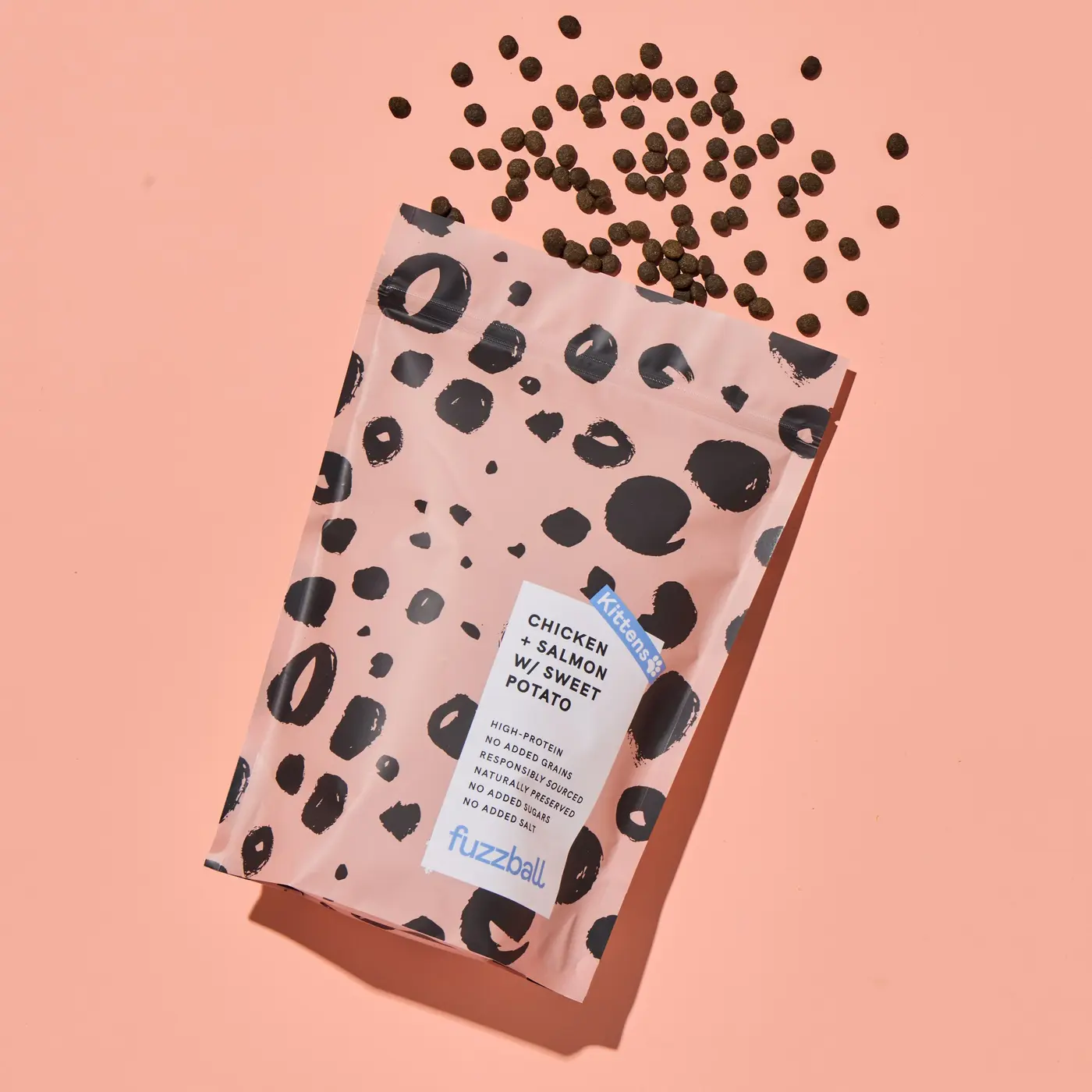
Pets · August 2025
August 2025 to August 2026 vs the same months a year earlier. GA4.

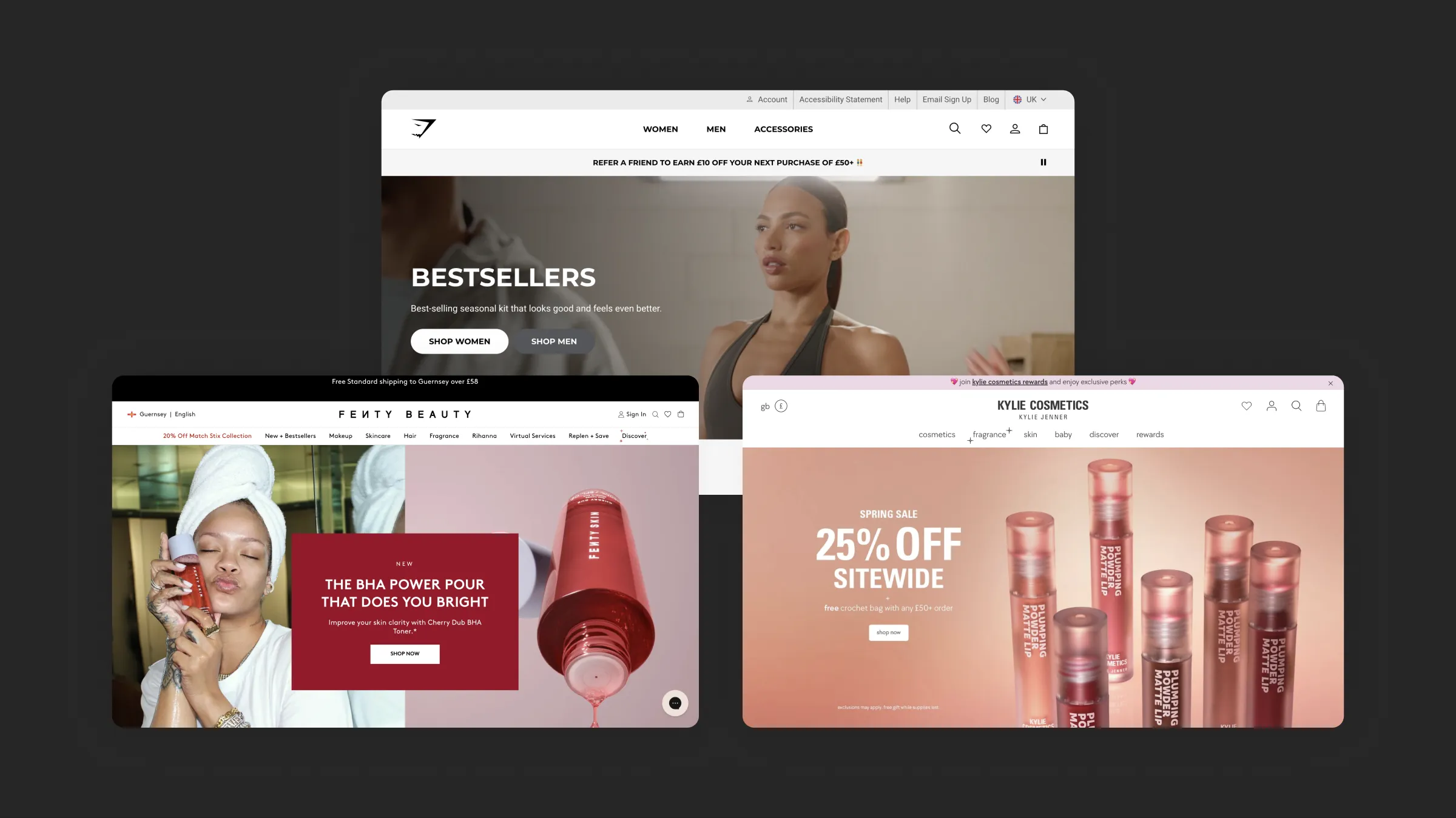
Beauty · May 2024
May 2024 to February 2025 vs the previous period. Shopify Analytics.
CRO works on a store with enough visitors and analytics where we can dive in and find out key areas that are failing. Then formulate a plan to put things right.
CRO needs visitors to measure. With small numbers, changes are hard to read, and the budget is better spent getting people to the store. My article on good conversion rates shows where you stand.
Give it a few months of sales, so there's a baseline to measure against. Until then, a UX review catches the obvious problems.
If every fix needs a workaround, you're patching a store that has run out of road.
Installing and configuring an analytics or CRO app is developer work, and quicker than a CRO project. I can introduce a developer. Once the data is coming in, CRO puts it to work.
The best way to start a CRO project is with a UX review of your live store. I go through your GA4 data first to see who shops and where they drop off, then map the entire purchase journey on a Miro board, screen by screen. Throughout, I ask one question: would I buy this product?
Your analytics and a UX review on a Miro board of real screenshots, showing where customers leave and why.
We agree what to fix first, then I prototype the changes in Figma, from small fixes to bigger redesigns.
The developer builds the changes, and I check them before they go live.
Results compared with the same period the year before, then the next round of fixes.
“We were very impressed by how data-driven Anthony was: the first thing he did was do an analysis of our website to identify click rates and where page views were dropping off. This analysis allowed us to figure out where exactly our priorities need to be. We were extremely pleased with the end result and we would not hesitate to recommend Anthony.”
 Jaideep Shah, Director, Zen Maitri · 2025
Prices checked November 2026. Every project is quoted individually once the brief is defined.
The price is dependent on how many design changes and sections come out of the review, and how many tests we set up.
| Shopify CRO | |
|---|---|
| Starting price | From £3,000 + VAT |
| Design time | From three weeks for a review and tweaks, depending on how many changes there are |
| Build time | Depends on how many changes the review finds |
| What you get | A UX review on a Miro board, an agreed list of fixes, and the changes designed in Figma |
| Who builds it | Cartmasters or Tom Blanchard, the Shopify developers who've built all 13 of my launches since 2023. Or your own team or agency |
| Shopify CRO (you're here) | A redesign, theme or bespoke | |
|---|---|---|
| The question | Which steps lose sales, and how do we fix them? | Has the store outgrown its theme or its brand? |
| Scope | The steps that lose sales, fixed in priority order | Every key template, the navigation and the design system |
| Starting price | From £3,000 + VAT | From £5,000 + VAT for a theme customisation, £10,000 + VAT for bespoke |
| Time | From three weeks for a review and tweaks | Six to ten weeks for a theme, six to eight weeks of design for bespoke |
| Best when | The store works, but sales have stalled | The theme keeps fighting you, or the brand has moved on |
Get a quote | A redesign, theme or bespoke |


Shopify CRO, or conversion rate optimisation, is improving your store so more visitors buy. It means finding where customers leave, redesigning those steps and measuring the result. A store is never finished, so it's ongoing work, not a one-off.
Above 2.7% puts a Shopify store in the top 20%, and the median is 1.4% (Littledata, October 2026). Your sector matters more than the average, so compare yourself with similar stores.
It depends on what's being measured. For a CRO change, I usually compare a week against a week, and make sure it's a fair test, with no sale or campaign flattering one side. For a case study, I show a longer stretch so the figure reflects the whole new store, and I always say which dates and which data it comes from.
Yes. I design the changes in Figma and brief your developer, then QA what they build before it goes live.
An analytics app shows you what happened and where. It can't design the change that fixes it, or judge whether that change suits your brand. I start from what your app already shows, so if it has found the drop-off, we go straight to the fix.
No countdown timers, fake scarcity or upsells crammed into the cart drawer, unless we've agreed they're right for your brand. I'll bring ideas like these to the table and we decide together. I'll always flag anything that risks what's already working, even if it would lift the number this month.
With the cleanest data available, and I always say which: GA4 where it's reliable, and till or EPoS data where it isn't. I track conversion rate and average order value, and compare like with like, so a sale or a campaign doesn't flatter the result. Where traffic allows, we A/B test.

Shopify CROUpdated

Shopify CRO
I reply within two working days.
Cookies
I use analytics cookies to see how people find and use this site. Nothing is tracked unless you accept.