

Shopify AI Search Visibility Design
AI search visibility design is the part of a Shopify store’s design that decides whether AI assistants like ChatGPT and Google’s AI Mode can find it, read it correctly and recommend it. I build it into every store I design, bespoke or theme, using what I learn on my own site, where Google now shows me for more than five times as many long, AI-style searches as a year ago. See all my Shopify design services.
Written by Anthony Bliss, the freelance Shopify designer behind UK eCommerce Website of the Year 2026 · Updated October 2026
Shopify AI Search
Trusted by growing Shopify brands
From independent brands to established retailers, I design Shopify stores that people and AI tools can find, understand and choose.










Shoppers skip your navigation
An AI assistant answers the question, then sends the shopper straight to one page. There’s no menu or homepage journey to explain who you are, so every page they land on has to say what you sell and who it’s for in its opening lines.
Questions are longer and more specific
People now ask for “a waterproof coat for a whippet under £60”, not “dog coats”. A store that states sizes, fit, materials and prices as text can answer that. A store that hides them in images and tabs can’t.
AI agents shop as well as search
AI agents can now compare products and buy on a shopper’s behalf. They read product information, policies and reviews, not your photography, so a beautiful store with thin product detail gets passed over.
Shoppers ask ChatGPT about your category, and you don't come up
Competitors get recommended for the questions your customers ask, even where your products are the better fit.
Your product facts sit where AI tools can't read them
Sizes in images, specs in PDFs, delivery details in banners. Shoppers can find them. AI tools can’t.
You're planning a redesign or migration
It’s the best moment to get this right, so the new store is ready for AI search from launch. See Shopify migrations.
Your products are on Shopify's AI channels
Once your catalogue reaches ChatGPT and Google’s AI Mode, what they read about you needs to be right.
Want your store found by AI as well as people?
Shopify AI Search Design Process
How I design for AI search in every project
I build AI search into every Shopify store I design, from bespoke builds to theme customisations, rather than selling it as an extra. It comes down to three jobs: helping AI tools find the right page, understand what you sell, and trust you enough to recommend you.
Step 1: Help AI tools find the right page
Pages that answer the questions shoppers actually ask
When someone asks ChatGPT for the best wine for a summer barbecue, it looks for the one page that answers that question best. If a store only has a generic collection, there’s nothing for it to point to.
I plan the store around the questions your customers ask, then design a clear page for each one, with the answer in its opening lines.
- Collections and landing pages built around real questions and uses
- Answer-first openings on product, collection and policy pages
- Navigation that matches how people describe what they want
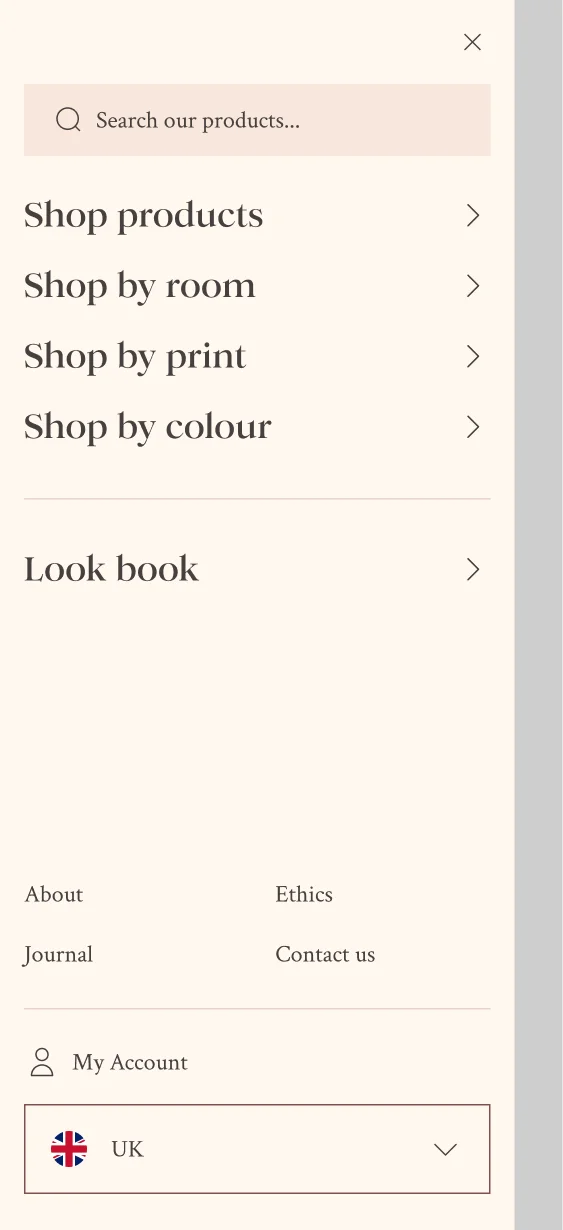
Projektityyny | Shop by product, room or print
Clear routes in from the navigation that match how people describe what they want, each leading to its own page. See the Projektityyny case study.
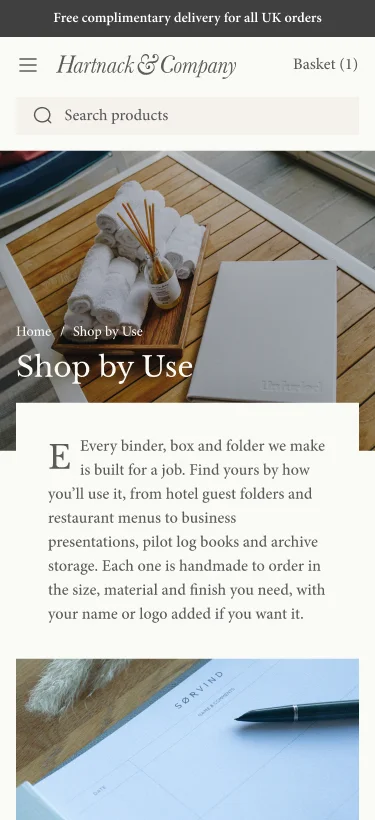
Hartnack & Co | Shop by Use
A landing page for each use, from business binders to pilot log books, so every question has one clear page. See the Hartnack & Co case study.
Drink Finder | Comparison toggle
Country, region, vintage and style written on the collection page, so people and AI tools can compare without opening every product. See the Drink Finder case study.

East at Home | Product cards
Spice level, dietary needs and flavour written on every card, not hidden in the photography. See the East at Home case study.
Step 2: Make every product detail readable
Product details people and AI agents can both read
AI agents don’t see your photography. They read the text on the page and the structure behind it, much like a screen reader does. A size chart saved as an image, or a delivery promise in a banner, is invisible to them.
If it isn’t written on the page, it doesn’t exist to an AI.
So I design the details that matter as real text, and set the structure up properly in the design system. On Shopify Plus projects, I plan this with a technical SEO specialist from day one.
- Sizes, materials, delivery and returns written on the page, not baked into images
- Product pages in a clear order: what it is, key facts, delivery and returns, reviews, then FAQs
- FAQs on the product and collection pages they answer, not tucked away on one FAQ page
- Clear headings and real buttons, with Product, review and breadcrumb structured data briefed to the developer to match the page
Step 3: Give AI tools proof they can check
Proof that shoppers and AI tools can trust
An AI recommends what it can verify. “Loved by thousands” carries little weight. A review score with its source, an award with its year and a returns policy in plain sight carry a lot.
I place proof where the decision happens: on product cards, beside the price and next to the add to basket button.
- Reviews and ratings linked to where they came from
- Awards, results and press with names and dates
- Delivery, returns and guarantees in plain sight
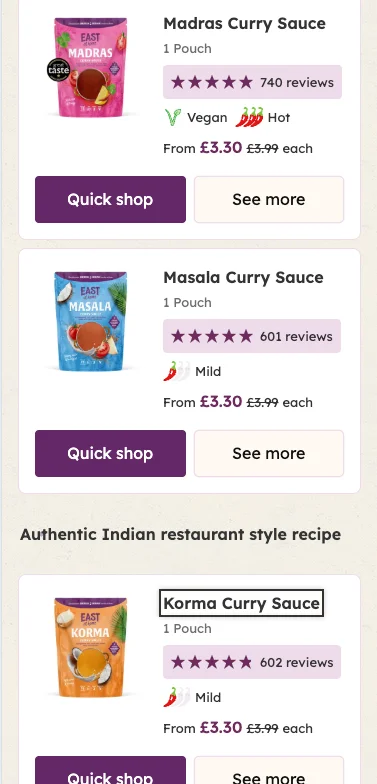
East at Home | Proof on every card
Review counts and the Great Taste award shown on the product card, where the decision happens.
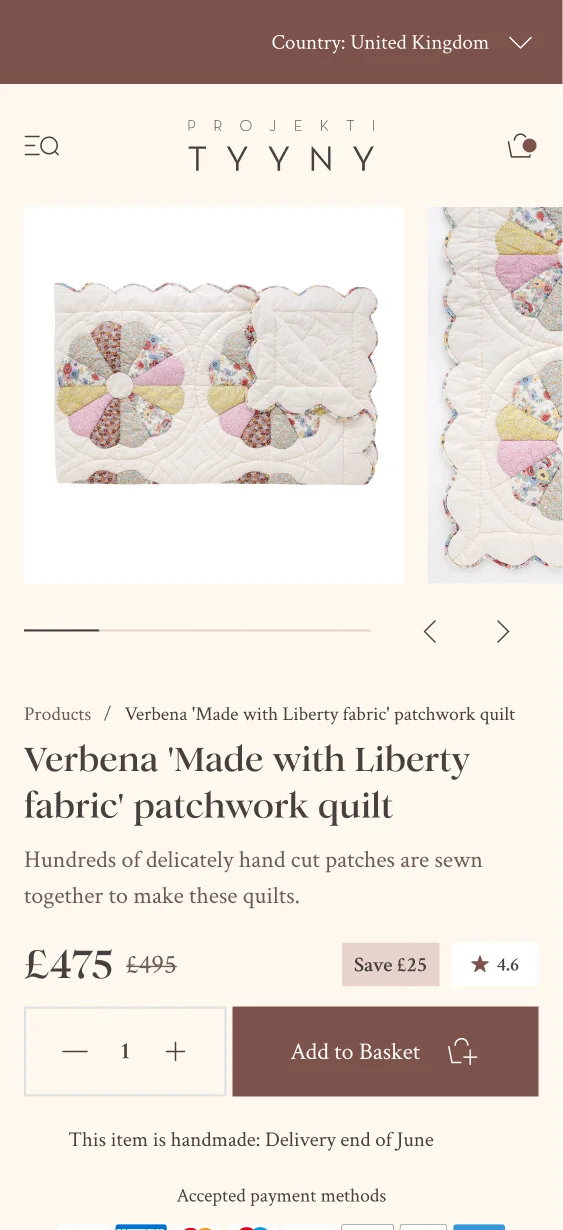
Projektityyny | Product page
The review score and the saving sit beside the price, so the proof is next to the decision.
AI Search Design vs GEO
AI search visibility design vs GEO: which does your store need?
Both help AI tools recommend you. They start in different places. Compared October 2026.
| AI search visibility design | GEO (generative engine optimisation) | |
|---|---|---|
| The question | Can AI tools read and trust your store? | How often do AI tools mention your brand? |
| Starts with | Your pages, product information and structure | Prompt research, content and mentions on other sites |
| Covers | Page structure, product details as text, structured data briefed to the developer, checkable proof | Content, digital PR, citation tracking and technical SEO |
| Who does it | A designer, as part of the store | An SEO or GEO agency, usually as a monthly service |
| Best when | You’re redesigning, migrating, or your store is hard to read | Your store reads well and you want more mentions elsewhere |
They work together. GEO gets your brand mentioned, and design decides what AI tools find when they reach your store.
Shopify Design Services
Explore a selection of my Shopify services to help grow your store
From complete store builds to subscription UX and CRO improvements, I help Shopify merchants increase sales and streamline their store experience.
Featured Client: Whistlefish
Featured Client: Window Fleur
Shopify Subscriptions
Simplify complex subscription flows for your customers. I design product pages, quizzes, and recurring payment setups that are intuitive and seamless, while managing any technical complexity behind the scenes.
Featured Client: Drink Finder
Shopify Migration
Moving your store to Shopify doesn’t have to be stressful. I design the new store so the move fixes what held you back, and work with a developer who handles the data and redirects.
Why Work With Me
With 20+ years of design experience and 6+ years focused exclusively on Shopify, I help brands create stores that convert. Every project combines brand strategy, UX expertise, and conversion-focused design.

AI Search Insights
What GEO and agentic commerce mean for Shopify brands
Two articles on how AI is changing the way shoppers find and buy from Shopify stores.
What Is Generative Engine Optimisation (GEO) and Why Every Shopify Brand Needs It in 2026
Getting found online used to mean one thing: ranking on…
Shopify Agentic Commerce: What UK Brands Need to Know
The way people discover and buy products online is changing…
It’s the part of a Shopify store’s design that decides whether AI assistants and agents can find it, read it correctly and recommend it. That means answer-first pages, product details written as text, a structure people and machines can both read, and proof that can be checked. I build it into every store I design.
No, and nobody honestly can. The AI tools decide what they recommend. I design the store so it’s easy for them to read and to trust.
In GA4, look for sessions whose source contains chatgpt, perplexity, gemini, copilot or claude, and see what those visitors go on to buy. A ready-made AI channel often undercounts, so filter by source yourself. Then ask ChatGPT and Google’s AI Mode the questions your customers ask, and note whether your store comes up.
GEO, or generative engine optimisation, is what agencies call getting cited by AI tools. Most of it is content, SEO and PR work, which isn’t what I do. I handle the design side: structure, product information and proof, built into the store itself. On Shopify Plus and larger projects, I team up with a technical SEO specialist from the start, so site structure, redirects and structured data are planned alongside the design.
No. Google says there are no extra requirements to appear in AI Overviews or AI Mode, and no special markup to add. An llms.txt file is optional. Clear pages, honest product information and structured data that matches the page come first.
Most themes add basic product markup, such as name, price and availability. Reviews, shipping and returns often need adding through your review app or developer. I brief exactly what each page needs, and it always matches what shoppers can see.
Make them eligible for Google Search, then easy to quote. Google draws on the same pages as Search, so a product page needs to be indexed, with its key facts in text and structured data that matches what’s visible. Nobody can choose which pages appear.
Agentic commerce is AI agents browsing, comparing and buying for a shopper, such as checking out inside ChatGPT. Shopify’s Agentic Storefronts put your products in ChatGPT, Copilot, Google’s AI Mode and the Gemini app, managed from your Shopify admin. Agents judge your product information, policies and reviews, so a ready store has all three clear, complete and in text.
Yes. AI agents read a store through the same structure screen readers use: headings, labels, real buttons, and text instead of words baked into images. Designing for one helps the other, and it matters more now the European Accessibility Act covers many online shops selling to customers in the EU.
No. AI agents still judge your product information, reviews and policies, and all of that comes from your store.
No. That’s a setting in your Shopify admin, or a job for your developer. I design what those channels read.
Shopify Expert
Get your store ready for AI search
Bespoke Shopify and Shopify Plus design, led by one UX/UI & CRO Specialist
20+ years of brand and design experience
A trusted network of the best Shopify developers, Klaviyo and SEO specialists for larger builds
This site is protected by reCAPTCHA and the Google Privacy Policy and Terms of Service apply.
Get in touch

Winner, UK eCommerce Awards 2026: UK eCommerce Website of the Year for Drink Finder, and UK User Experience of the Year for East at Home.
Registered in England & Wales No. 10575474. Based in Falmouth, Cornwall, UK.