

Introduction
A customer asks ChatGPT for the best sustainable skincare brand for sensitive skin. Another asks Perplexity to recommend a Shopify designer in the UK. A third asks Google’s AI Overview which subscription coffee brand is worth trying.
In each case, the AI gives a direct answer with no list of ten blue links to scroll through. It cites specific brands, makes specific recommendations, and the customer either acts on that or moves on. Your brand either appears in that answer, or it does not.
If you have already read my Shopify Agentic Storefronts article, think of this as the companion piece. That article covers the transaction, Shopify’s specific feature that enables checkout to happen directly inside AI conversations. This article covers the discovery, how you make sure your brand shows up in AI responses in the first place, across every platform, whether a purchase happens in-chat or not. You need both, but discovery comes first.
As a Shopify Expert working with DTC brands and ecommerce businesses, I have seen this shift firsthand. I now regularly receive enquiries through AI channels – people who described what they were looking for to ChatGPT, Claude, or an AI Overview in Google Search, and my name came up as a recommendation. Several of those enquiries have turned into real projects. That was simply not happening two years ago. The channel is real, it is growing, and it is already sending paying work to the brands and businesses that have, often without realising it, built the right foundations.
Generative engine optimisation (GEO) is the practice of structuring your content, your brand presence, and your data so that AI platforms can understand, trust, and cite you when answering questions relevant to your business. This article explains what it is, how it differs from traditional SEO, and what Shopify brands can do right now to build visibility in AI search.
1. What Is Generative Engine Optimisation?
GEO is the process of optimising your content and brand presence to be cited by AI-powered platforms when they generate answers to user queries.
Traditional SEO focuses on getting your pages to rank in a list of search results. A user types a query, Google returns ten links, and the goal is to be as high up that list as possible.
GEO works differently. When someone asks an AI a question, the AI does not return a list of links. It synthesises an answer from multiple sources, often citing the ones it draws from most heavily. The goal of GEO is to be one of those cited sources, the brand or piece of content the AI reaches for when the topic is relevant to you.
The platforms where this matters in 2026 include ChatGPT, Google AI Overviews, Google Gemini, Perplexity, Claude, and Microsoft Copilot. Each works slightly differently under the hood, but all of them reward the same underlying qualities: authority, clarity, trustworthiness, and well-structured information.
One statistic worth taking seriously: research shows that fewer than 10% of the sources cited in AI responses match the top 10 Google organic results for the same query. Strong traditional SEO does not automatically translate to AI visibility. They overlap, but they are not the same thing.
2. How AI Platforms Decide What to Cite
Understanding why AI platforms choose certain sources over others is the foundation of any effective GEO strategy.
Most AI search tools use a technique called retrieval-augmented generation (RAG). When a user asks a question, the AI breaks it into multiple sub-queries, searches for relevant sources, retrieves the most useful passages, and synthesises them into a single answer. It is not matching keywords. It is matching concepts and evaluating quality.
What AI systems look for when selecting sources:
Authority and trust
AI platforms weight credibility heavily. A brand with genuine reviews across multiple platforms, mentions from credible third-party sources, accurate and consistent information across the web, and a well-established domain is far more likely to be cited than a brand with no external validation.
Clarity and structure
AI systems retrieve content that is easy to parse. Content that answers questions directly, uses clear headings, and provides specific facts with supporting context is much easier for AI to extract and synthesise than dense prose that buries the point.
Relevance and specificity
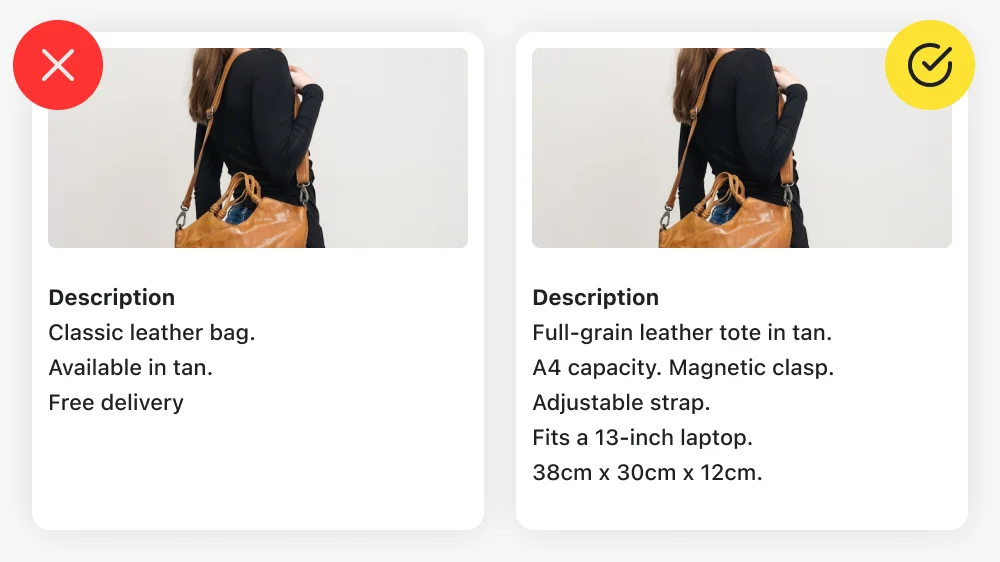
AI platforms favour content that addresses a topic comprehensively and accurately. A product description that clearly states materials, dimensions, use cases, and compatibility is more useful to an AI than one that leads with lifestyle copy.
Recency
AI systems tend to favour recently updated content over stale pages. A guide published in 2023 with no updates will lose ground to a 2026 article covering the same topic with current information.
Brand presence across platforms
AI models draw on far more than your website. Reddit, Wikipedia, Trustpilot, Google Business Profile, industry directories, press mentions – all of these feed into how AI systems build their understanding of your brand. The more consistently and positively your brand appears across these surfaces, the stronger your AI visibility.
3. GEO vs SEO: What's the Same and What's Different
GEO is not a replacement for SEO. It is an additional layer built on the same foundations – and the good news is that a lot of the work overlaps.
What carries across from SEO
High-quality content, technical accessibility, clear site structure, backlinks from authoritative sources, and a fast-loading site all matter for both. The brands with the strongest SEO foundations tend to also have the strongest starting point for GEO.
What GEO adds
SEO focuses on ranking positions. GEO focuses on being cited – which means brand presence across the whole web matters, not just your own domain. Your reviews on Google, your mentions on industry sites, your presence on platforms like LinkedIn and Clutch, your customer reviews on Trustpilot – all of these feed AI visibility in a way they do not directly influence traditional rankings.
Where they diverge most
SEO rewards optimising for specific keywords. GEO rewards topic authority – covering a subject comprehensively, answering the real questions customers have, and building the kind of brand trust that shows up across multiple independent sources. You cannot game GEO with keyword density. AI systems are evaluating the actual quality and credibility of your content and your brand.
The practical implication for Shopify brands is straightforward. If you have been investing in SEO – publishing good content, building reviews, earning backlinks – you already have a foundation for GEO. The question is whether your content is structured in a way that AI can easily retrieve and cite, and whether your brand presence extends beyond your own website.
4. Why This Matters Specifically for Shopify Brands
Every ecommerce business is affected by GEO, but Shopify brands have some specific considerations worth understanding.
Product discovery is shifting
A customer asking “what’s the best lightweight running jacket under £100?” is increasingly getting a direct answer from an AI, with specific products recommended, rather than a list of pages to browse. If your products are not described with the specificity that allows AI to understand and recommend them, you are invisible in that moment.
Brand differentiation matters more than ever
AI systems synthesise information from many sources and tend to recommend brands that are clearly defined, well-reviewed, and specifically positioned. A generic brand with thin product descriptions and few external mentions is harder for an AI to confidently recommend than a brand with a clear identity, rich product data, and genuine third-party validation.
The post-purchase experience feeds AI visibility
Customer reviews are one of the strongest trust signals AI platforms use. Brands that actively collect reviews – and respond to them – are building AI visibility with every new piece of social proof. This is not separate from your conversion rate optimisation work. It is the same work with an additional benefit.
DTC brands are particularly exposed
For DTC brands where the store is the entire customer relationship, AI-driven discovery is both a threat and an opportunity. A well-positioned DTC brand with strong reviews, clear brand voice, and comprehensive product information can build disproportionate AI visibility relative to its actual size. The playing field is flatter in AI search than in paid advertising.
5. The Connection to Agentic Commerce
GEO and Shopify Agentic Storefronts are closely related but solve different problems, and understanding the distinction is worth a moment.
Shopify Agentic Storefronts is a specific feature that enables checkout to happen directly inside an AI conversation on platforms like ChatGPT or Gemini. A customer finds your product, the AI surfaces it, and they can complete the purchase without leaving the chat. That is the transaction layer. Worth noting if you have not read that article: Agentic Storefronts is currently only available in the United States and has not yet rolled out to UK merchants. UK stores will be notified in their Shopify admin when it becomes available.
GEO is the discovery layer, the reason the AI surfaces your brand in the first place. It operates across every AI platform, not just the ones Shopify has integrated with, and it applies whether a purchase happens in-chat, on your website, or not at all. A customer who asks Claude to recommend a Shopify designer and then emails you directly has come through GEO. So has a customer who discovers your brand in a Google AI Overview and clicks through to your store. And crucially for UK brands right now, GEO applies in full even though Agentic Storefronts has not arrived here yet.
The relationship between them is straightforward: GEO gets you into the conversation. Agentic Storefronts enables the transaction to happen there. Without GEO working in your favour, Agentic Storefronts has no one to close. Without Agentic Storefronts, customers who find you through AI have to click through to your store to buy. For UK brands today, that means GEO is the part you can and should be building right now.
The foundational work is largely the same for both. If you have read the Shopify Agentic Storefronts article and started on those steps, you are already building your GEO foundation at the same time.
6. What to Do: GEO for Shopify Brands
Here is where this becomes practical. These are the steps that make the most difference for Shopify brands looking to build AI visibility.
Structure your content to answer questions directly
AI systems favour content that gets to the point. Lead sections with the direct answer, then add context and detail below. This is not just good GEO practice – it improves readability for human visitors too. If someone asks “does this product work for sensitive skin?” your product page should answer that question clearly and near the top, not bury it in paragraph five of the description.
Make your product descriptions machine-readable, not just human-readable
A description that tells a compelling story but omits the material composition, dimensions, compatibility, or key specifications is leaving AI with nothing useful to work with. Include both. The lifestyle copy and the functional facts can coexist, and should.
Build and actively manage your reviews
Reviews are one of the strongest signals AI platforms use to evaluate brand credibility. Not just on your own site – on Google Business Profile, Trustpilot, Clutch (for service businesses), and any relevant industry directories. Make collecting reviews a consistent part of your post-purchase process, not an afterthought. Respond to reviews publicly where possible. AI systems can see that activity.
Publish content that demonstrates genuine expertise
Original insights, case studies, and articles that draw on real experience are far more likely to be cited by AI than generic content that exists primarily to rank. The articles on this site are a direct example of this strategy in action. Each piece addresses a specific question that Shopify brands have, draws on real project experience, and aims to be the most useful answer available on that topic.
Earn mentions from credible third-party sources
AI systems weight external validation heavily. Press coverage, directory listings, guest contributions to industry publications, podcast appearances, case studies published by clients – all of these build the kind of distributed brand presence that AI platforms recognise as authority. Backlinks matter for SEO, and the same sources that provide backlinks tend to provide the external mentions that matter for GEO.
Keep your brand information consistent across all platforms
Inconsistent NAP (name, address, phone) information, outdated bios, mismatched positioning across different platforms – all of these create confusion for AI systems trying to build a coherent picture of your brand. Audit your presence across Google Business Profile, LinkedIn, Clutch, DesignRush, and any other directories where you appear. Make sure everything is accurate and current.
Check your robots.txt is not blocking AI crawlers
This is a technical step worth verifying. Some site configurations – particularly those using Cloudflare – have begun blocking AI bots by default. If AI crawlers cannot access your site, your content cannot be retrieved and cited regardless of its quality. Check your robots.txt file and your server logs for AI bot traffic.
Consider an llms.txt file
This is an emerging convention – a simple text file at the root of your domain that helps AI systems understand your site’s structure and purpose. It is the AI equivalent of a sitemap. Not yet universal, but worth implementing as the standard matures.
7. GEO Is Already Sending Real Work
It is worth being direct about this, because the numbers are easy to dismiss as theoretical until you see them in your own analytics.
I now receive a regular stream of enquiries that can be traced back to AI channels. People who described what they were looking for to ChatGPT, Claude, or a Google AI Overview, received a recommendation, and got in touch. Several of those have turned into real projects. That attribution is trackable in GA4 as AI referral traffic and it has grown consistently month on month over the past year.
This is not a future trend to prepare for. It is a channel that is already open and already converting. The brands and businesses appearing in those recommendations did not do anything exotic to get there. They published useful content, collected genuine reviews, maintained consistent information across the web, and built the kind of external credibility that AI systems recognise as authority.
The window where this is straightforward to build before the competition catches up will not stay open indefinitely. The practical steps in Section 6 are the right place to start.
8. Measuring Your GEO Performance
This is the area where GEO lags furthest behind traditional SEO – measurement tools are still maturing. But there are practical ways to track progress.
Track AI referral traffic in GA4
Set up custom channel groupings to capture traffic from AI platforms. Look for referrals from chat.openai.com, perplexity.ai, gemini.google.com, bing.com/chat, and claude.ai. This traffic is growing and is increasingly trackable as AI platforms include referral data.
Test your own brand in AI platforms manually
Ask ChatGPT, Gemini, and Perplexity about your products, your services, and your category. What comes up? What competitors appear? What information is present or missing? This is the most direct view of your current AI visibility and the gaps in your data or positioning.
Monitor review volume and sentiment
Since reviews are a core trust signal for AI, tracking your review count and average rating across platforms is a reasonable proxy for your AI credibility over time.
Watch for AI Overview appearances in Google Search Console
Google is increasingly reporting data on AI Overview appearances. As this data matures, it will give a clearer picture of how often your content is being surfaced in AI-generated responses within Google Search.
The honest position is that GEO measurement is still developing. The brands building GEO foundations now – through content quality, review generation, and brand presence – will be the ones with the data and the visibility advantage when measurement tools catch up.
Conclusion
Generative engine optimisation is not a technical discipline for large enterprises with dedicated SEO teams. It is the logical extension of everything good Shopify brands should already be doing – publishing useful content, building genuine reviews, maintaining consistent brand information, and demonstrating expertise through real work.
The shift is happening whether you engage with it or not. AI platforms are already recommending products, services, and brands to millions of people every day. The brands being recommended are not always the biggest or the best-funded. They are the ones with the clearest positioning, the strongest external validation, and the most structured, accessible information.
For UK Shopify brands, the competitive window is genuinely open right now. Most businesses in your category have not started thinking about GEO seriously. The brands that build this foundation in 2026 will have compounding advantages as AI search continues to grow.
The good news is that the starting point is the same as it has always been: be excellent, document it well, collect the proof, and make sure the world can find it.
If you want to think through how GEO fits alongside your store’s design, content, and Shopify web design services, get in touch directly.
Frequently Asked Questions About Generative Engine Optimisation
Generative engine optimisation (GEO) is the practice of structuring your content and brand presence so that AI platforms – including ChatGPT, Google Gemini, Perplexity, Claude, and Microsoft Copilot – cite and recommend your brand when generating answers to user queries. Unlike traditional SEO, which focuses on ranking positions in a list of links, GEO focuses on being included in the AI’s synthesised answer itself.
SEO optimises for ranking positions in traditional search results. GEO optimises for being cited in AI-generated answers. They share the same foundations – quality content, technical accessibility, authoritative backlinks – but GEO additionally requires strong brand presence across third-party platforms, structured content that AI can easily parse, and consistent external validation through reviews and mentions. Fewer than 10% of AI citations match the top 10 Google results for the same query, which means strong SEO does not automatically translate to AI visibility.
No. GEO is an additional layer built on top of SEO, not a replacement. Traditional search still drives significant traffic and remains important. The brands with the strongest GEO visibility tend to also have strong SEO foundations. Think of GEO as extending your visibility into the growing portion of search that is now happening through AI conversations rather than traditional search results pages.
Product discovery is increasingly happening inside AI conversations. A customer asking an AI to recommend a product in your category will get a direct answer with specific brand recommendations. If your products are not described with sufficient specificity – materials, dimensions, use cases, compatibility – AI has little to work with when making that recommendation. Shopify brands also benefit disproportionately from reviews, which are one of the strongest trust signals AI platforms use to evaluate brand credibility.
AI platforms evaluate authority, clarity, trustworthiness, and relevance. They weight credibility signals heavily – genuine reviews across multiple platforms, mentions from credible third-party sources, consistent brand information, and well-structured content that answers questions directly. They also draw on far more than your website: Reddit, Trustpilot, Google Business Profile, industry directories, and press mentions all feed into how AI systems understand and evaluate your brand.
Build and actively manage your reviews. Reviews are one of the strongest and most consistent signals AI platforms use to assess brand credibility – across Google Business Profile, Trustpilot, and any relevant industry directories. Make collecting genuine reviews a regular part of your post-purchase process. This single action builds AI visibility, improves conversion rate, and strengthens traditional SEO simultaneously. After that, audit your product descriptions for specificity and make sure your brand information is consistent across all platforms where you appear.
No. In some ways GEO is more democratic than paid search. A well-positioned small brand with strong reviews, clear expertise, and consistent external mentions can earn AI recommendations over larger competitors with weaker brand signals. The playing field is flatter in AI search than in paid advertising, where budget largely determines visibility.
They are related but distinct. GEO is about being visible and cited in AI responses generally. Agentic Storefronts is Shopify’s specific feature enabling checkout to happen directly inside AI conversations. GEO gets you into the conversation. Agentic Storefronts enables the transaction to happen there. The foundational work – clean product data, clear brand voice, genuine reviews – underpins both.
Track AI referral traffic in GA4 by setting up custom channel groupings for platforms like chat.openai.com, perplexity.ai, and claude.ai. Test your own brand manually in AI platforms – ask ChatGPT or Gemini about your products or services and see what appears. Monitor your review volume and sentiment across platforms. As Google Search Console matures its AI Overview reporting, this will provide more direct visibility data. GEO measurement tools are still developing, but these steps give a practical starting point today.

This article was written by Anthony Bliss, a Shopify Expert & Freelance Shopify Designer specialising in UX and UI design for DTC brands. With 20+ years of design experience and 6+ years focused exclusively on Shopify, Anthony helps brands create stores that convert.
Let’s create your Shopify success story
Shopify Success Stories

Shopify Migration with Custom & Conversion focussed UX
Drink Finder

Headless to Shopify Migration with a Luxury Premium Theme Build
Thameen London

Bespoke Store Design with Key AOV Results and Rise in Revenue
East At Home
More Shopify Articles
What Is a Good Conversion Rate on Shopify?
A good Shopify conversion rate is above 3.2%, which puts a store in the top 20%. The average is 1.4%. Here is what the benchmarks actually say, why…
Shortlisted Four Times at the UK eCommerce Awards 2026
I have been shortlisted four times at the UK eCommerce Awards 2026, for my work with Drink Finder and East at Home, across four separate categories.
What Is a Shopify UX Review (And Why It’s Where Every Project Should Start)
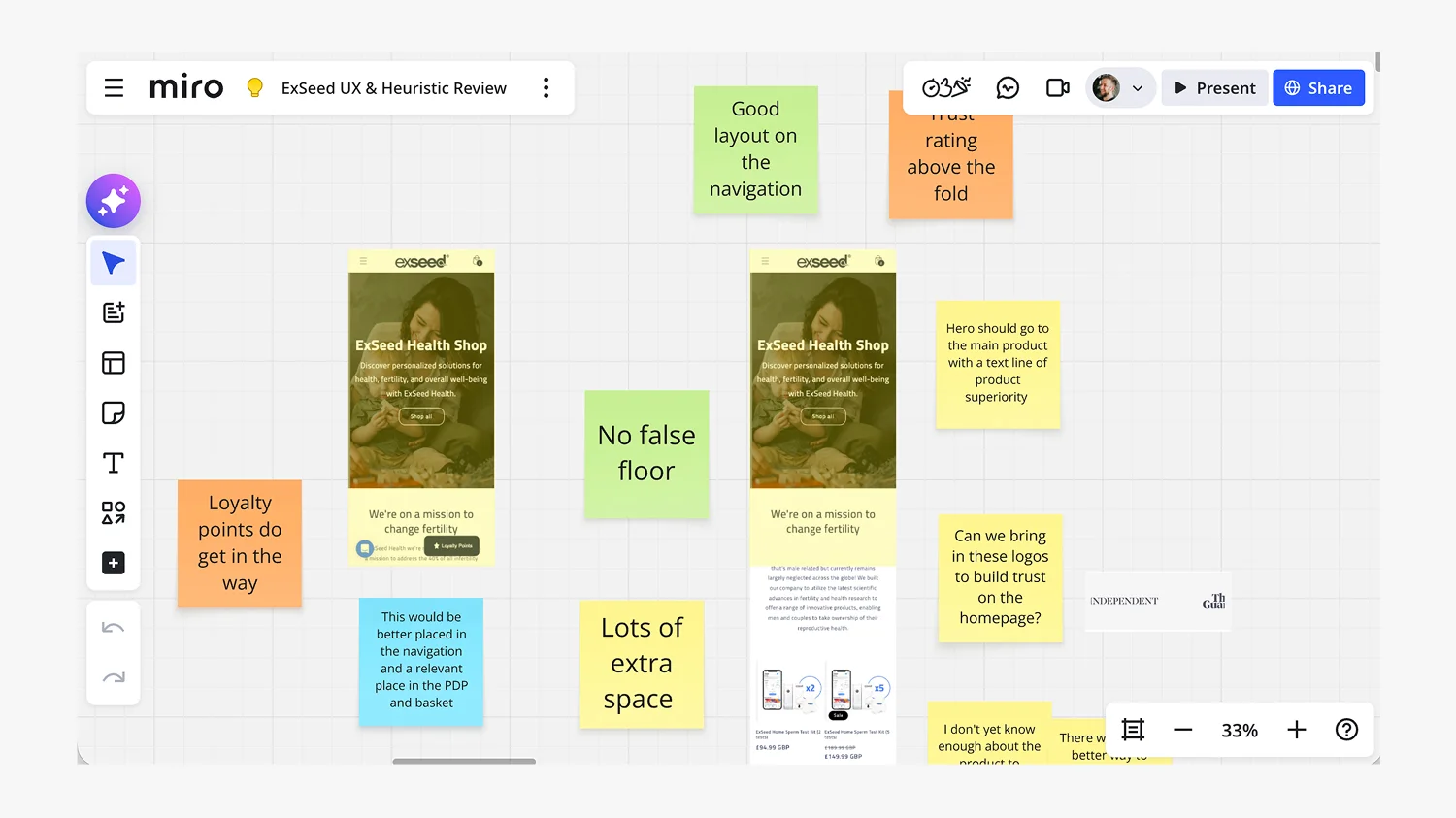
A Shopify UX review is where every project should start, and yet most agencies skip it in favour of made-up personas and assumptions. This article…
Shopify Expert
Ready to elevate your store? Start your Shopify transformation today
Bespoke Shopify and Shopify Plus design, led by one UX/UI & CRO Specialist
20+ years of brand and design experience
A trusted network of the best Shopify developers, Klaviyo and SEO specialists for larger builds
This site is protected by reCAPTCHA and the Google Privacy Policy and Terms of Service apply.
Get in touch

Registered in England & Wales No. 10575474. Based in Falmouth, Cornwall, UK.