


Introduction
As a Shopify Expert working exclusively with DTC brands, I’ve seen this pattern repeatedly. But most Shopify designers don’t understand DTC. They treat every store the same, whether it’s a marketplace, a wholesale operation, or a brand selling direct. That doesn’t work for DTC, where margins are tight and every percentage point in conversion matters. Here’s what actually separates a good DTC Shopify designer from someone who’ll build you a pretty site that doesn’t sell.
Why DTC Brands Need a Different Approach to Shopify Design
Direct-to-consumer isn’t just ecommerce with better branding. The business model changes what your store needs to do:
Customer Acquisition Cost
You’re paying for every customer through paid ads, content marketing, or influencer partnerships. Traditional retailers might get foot traffic or marketplace visibility. You don’t. That means your store has to convert at a higher rate just to stay profitable. Every design decision should reduce friction and increase conversion.
Lifetime Value Over One-Time Sales
DTC brands win on repeat purchases. Your store needs to collect emails, encourage subscriptions, and make reordering effortless. A designer who doesn’t understand this will focus on first-time conversion and ignore retention mechanics.
Brand Control
You own the customer relationship. That means your store is your brand. Design isn’t just aesthetics. It’s how customers perceive quality, trust, and value. Generic Shopify themes or cookie-cutter designs kill that perception. You need a designer who understands brand expression through UX, not just visual design.
Conversion-Focused Design Over Aesthetic Design
Most designers prioritise how a site looks. DTC designers prioritise how it performs. Good design should be invisible. If customers notice your design before they add to cart, something’s wrong.
What Conversion-Focused Design Actually Means
- Clear product value propositions above the fold
- Frictionless add-to-cart and checkout flows
- Trust signals placed where they matter (not decoratively)
- Mobile-first design (60-70% of DTC traffic is mobile)
- Fast load times (every 100ms delay costs conversion)
- Strategic use of scarcity and urgency (not fake countdown timers)
A designer focused on conversion will ask about your average order value, cart abandonment rate, and current conversion metrics before they talk about fonts or colours. If you want to understand why human-led conversion thinking matters so much, read this piece on why conversion rate optimisation is still a human skill. If they don’t ask these questions, they’re not the right fit for DTC.
Real Examples: Conversion-Focused Design for DTC Brands
Here are two DTC brands I’ve worked with, showing how conversion-focused design translates to measurable results:
Fuzzball: DTC Cat Food Subscription Brand

For Fuzzball, a DTC cat food subscription brand, I designed the entire store with conversion and retention as primary goals. The challenge was balancing brand personality (fun, approachable) with the serious UX required for subscription products.
What I focused on:
- Custom quiz flow to match cats with the right food (personalisation increases conversion)
- Clear subscription value proposition above the fold
- Frictionless subscription signup (not buried in product page complexity)
- Mobile-first product pages (the majority of cat food buyers browse on mobile)
- Seamless quiz-to-checkout journey with optimised conversion points
Results:
+86% increase in quiz summary page to checkout conversion
+62.5% increase in overall site purchase conversion rate
Eat at Home: British Indian Restaurant style curries at home.

For Eat at Home, a British Indian meal kit brand, the conversion challenge was different. Meal kits compete on convenience and value, so the store needed to make ordering feel effortless while justifying the price point through quality signals.
Key conversion elements:
- High-converting newsletter signup (clear value: 10% off + free recipe ebook)
- Product photography and descriptions focused on meal quality and authenticity
- Simplified basket and checkout flow (reducing decision fatigue)
- Strategic trust signals (delivery information, ingredient sourcing)
- Mobile-optimised experience for browsing and ordering
Results:
+26% increase in revenue per session
+178% increase in overall revenue growth
+16% increase in average basket value
This is what conversion-focused design looks like: understanding the specific barriers for your product type and DTC business model, and then systematically removing them through UX decisions that directly impact revenue.
UX and UI: Why You Need Both
User Experience (UX) and User Interface (UI) are different skills. You need a designer who can do both or who partners with someone who can.
UX: Making It Work
UX is the flow. How do customers move from landing page to checkout? Where do they get stuck? What questions do they have at each stage? A good UX designer maps customer journeys, identifies friction points, and designs solutions. For DTC, this means understanding why someone abandons cart, how to reduce decision fatigue, and when to introduce trust signals.
UI: Making It Look Right
UI is the visual layer. Colours, typography, spacing, and button styles. This is where brand expression happens. A strong UI designer makes your store feel premium, trustworthy, and aligned with your brand identity. For DTC, UI communicates quality and justifies price points.
Many designers are strong in one area but weak in another. You need both. A beautiful site with broken UX won’t convert. A functional site with weak UI won’t build brand equity. Ask any designer you’re considering: show me examples of both your UX work (flows, wireframes, problem-solving) and UI work (visual design, branding). If they can’t clearly separate the two, they probably don’t excel at both.
Shopify-Specific Technical Knowledge Matters
Shopify has constraints. A designer who knows the platform can work within them efficiently. One who doesn’t will promise things that can’t be delivered or require expensive workarounds.
What Shopify Knowledge Looks Like
- Understanding Shopify 2.0 sections and blocks
- Knowing when to use apps vs custom code
- Experience with Shopify’s checkout limitations and extensions
- Understanding Liquid templating and Shopify’s theming structure
- Knowledge of Shopify’s product variant limits and workarounds
- Experience integrating subscription apps (ReCharge, Recharge, Appstle)
Ask potential designers: what’s a recent Shopify limitation you ran into, and how did you solve it? Their answer will tell you immediately if they know the platform or if they’re learning on your dime.
How to Review a Designer's Portfolio for DTC Fit
Don’t just look at pretty screenshots. Visit the actual stores. Test them like a customer.
Questions to Ask When Reviewing Portfolio Work
- Are these DTC brands or other business models? DTC experience matters.
- Can I actually visit these stores, or are they just mockups?
- How does the mobile experience feel? (Test on your phone, not just resize your browser)
- Is the add-to-cart process smooth? Any unnecessary steps?
- Do product pages answer the questions I’d have as a buyer?
- Are there clear trust signals (reviews, shipping info, guarantees)?
- Does the site load fast, or does it feel sluggish?
If their portfolio shows one beautiful hero image per project but you can’t actually use the stores, that’s a red flag. You need working examples, not gallery pieces.
Red Flags When Hiring a Shopify Designer for Your DTC Brand
Watch for these warning signs:
- They talk only about aesthetics – If the conversation is all fonts, colours, and trends, they’re not focused on conversion.
- No questions about your metrics – A good designer asks about current conversion rates, AOV, traffic sources, and customer behaviour before proposing anything.
- Portfolio is all different platforms – Shopify specialists should have mostly Shopify work. If they jump between WordPress, Wix, and Shopify, they’re generalists, not specialists.
- They promise custom checkout on standard Shopify – Shopify locks down checkout unless you’re on Shopify Plus. If they claim otherwise, they don’t understand the platform.
- Timeline seems too fast – A proper DTC store takes 6-12 weeks minimum. Anyone promising 2-3 weeks is cutting corners or templating your site.
- No mention of testing or iteration – Conversion optimisation is ongoing. A designer who thinks they’ll nail it perfectly on launch day doesn’t understand DTC.
Questions to Ask Before Hiring a Shopify Designer
These questions will quickly reveal if someone understands DTC:
- What’s your process for understanding our target customer before designing anything?
- Can you show me examples of DTC Shopify stores you’ve designed? (Not just any Shopify stores)
- How do you approach mobile design differently from desktop?
- What metrics do you track to measure if a design is successful?
- How do you handle subscription products in Shopify?
- What’s your approach to site speed and performance optimisation?
- How do you balance brand expression with conversion optimisation?
What a Successful Shopify Designer Relationship Looks Like
You’ll know you’ve hired the right designer when:
- They challenge your assumptions about what customers want
- They propose solutions you hadn’t considered
- They explain trade-offs clearly (speed vs features, brand vs conversion)
- They show you data or examples to support their recommendations
- They’re comfortable saying ‘I don’t know, let me research that’
- They care as much about post-launch performance as pre-launch perfection
Conclusion: The Bottom Line on Hiring a Shopify Designer for DTC
DTC brands need designers who understand conversion, not just aesthetics. You need someone who can balance brand expression with performance optimisation. Someone who knows Shopify’s technical constraints and can work within them efficiently. Someone who asks about metrics before colours.
Look for portfolio work with real DTC brands. Ask about UX process, not just visual outcomes. Verify Shopify expertise with specific technical questions. And recognise that a skilled freelancer often delivers better value than an agency, especially in the early stages of your brand.
Your Shopify store is your primary sales channel. The designer you hire directly impacts revenue. Choose based on expertise, not price. Choose based on process, not portfolio aesthetics. Choose someone who understands that for DTC brands, every percentage point in conversion rate matters. For a broader guide to the hiring process, read what to look for when hiring a Shopify designer.
Looking for a Shopify designer who understands DTC conversion and brand-building? See how I help DTC brands design stores that convert.
Frequently Asked Questions About Hiring Shopify Designers for DTC Brands
A DTC-specialised designer understands the unique economics of direct-to-consumer brands: high customer acquisition costs, the importance of lifetime value over single transactions, and the need for conversion rates that justify paid advertising spend. They focus on retention mechanics (subscriptions, reorder flows, email capture) and understand how to balance brand expression with performance. Regular Shopify designers might create beautiful stores, but without understanding DTC metrics, those stores often underperform.
For most DTC brands under £5M in revenue, a skilled freelance designer offers better value. You get direct communication, faster decision-making, lower costs, and often higher quality because you’re working with the actual person doing the design work, not a junior designer managed by an account person. Agencies make sense when you need a full team (development, marketing, strategy) simultaneously or when you’re at scale and need guaranteed availability.
Quality DTC Shopify design typically ranges from £8,000-£25,000 for a complete store build, depending on complexity, custom features, and the designer’s experience. Anything significantly cheaper likely means templates, junior designers, or offshore work with quality issues. Anything significantly more expensive is usually agency pricing with overhead. Remember that your store directly impacts revenue, so this is an investment, not an expense.
A proper DTC store build takes 6-12 weeks from kickoff to launch. This includes discovery, UX planning, design, development, testing, and content population. Anyone promising 2-3 weeks is either using templates (which kills differentiation) or cutting corners. Rushing this process almost always results in a store that needs expensive fixes post-launch. Factor in time for revisions and testing.
Ask: Can you show me 3-5 DTC stores you’ve designed (not just any ecommerce)? What conversion rates did they achieve? How do you approach customer retention design? What metrics do you track post-launch? How do you handle subscription products? What’s your process for understanding our target customer? Their answers will quickly reveal if they understand DTC or if they’re learning on your budget.
Yes. UX (user experience) determines how your store works and flows. UI (user interface) determines how it looks and feels. You need both. A beautiful site with broken UX won’t convert. A functional site with weak UI won’t build brand equity or command premium prices. Make sure your designer has demonstrated competence in both areas, not just visual design.
They should understand Shopify 2.0 sections and blocks, know when to use apps versus custom code, understand checkout limitations and extensions, have experience with Liquid templating, know product variant constraints, and understand subscription app integration. Ask them about a recent technical limitation they encountered and how they solved it. Their answer reveals their depth of platform knowledge.
It depends on project complexity. Some designers can handle Shopify development (theme customisation, Liquid work, basic apps). For simple builds, this can work well and keeps communication clean. For complex builds with custom features, advanced checkout modifications, or heavy technical requirements, you might need a separate developer. Ask upfront what’s included and where their technical limits are. I always see design and development as 2 different skills and mindsets. I wouldn’t hire a plumber to do an electrician’s job.
Visit the actual live stores, not just screenshots. Ask specific questions about their role (Did you do UX, UI, development, or all three?). Ask about challenges they faced on specific projects and how they solved them. Real designers can talk in detail about their process, decisions, and outcomes. Fake portfolios crumble under specific questioning.
Clarify this upfront. Most designers include a period of post-launch support for bug fixes and minor adjustments (typically 2-4 weeks). Ongoing design updates, new features, or conversion optimisation work usually requires a separate arrangement (monthly retainer or project-based). Make sure you understand what’s included in the initial scope versus what costs extra. Good designers stay available for their clients even after launch.

This article was written by Anthony Bliss, a Shopify Expert & Freelance Shopify Designer specialising in UX and UI design for DTC brands. With 20+ years of design experience and 6+ years focused exclusively on Shopify, Anthony helps brands create stores that convert.
Let’s create your Shopify success story
Shopify Success Stories

Shopify Migration with Custom & Conversion focussed UX
Drink Finder

Headless to Shopify Migration with a Luxury Premium Theme Build
Thameen London

Bespoke Store Design with Key AOV Results and Rise in Revenue
East At Home
More Shopify Articles

What Is a Good Conversion Rate on Shopify?
A good Shopify conversion rate is above 3.2%, which puts a store in the top 20%. The average is 1.4%. Here is what the benchmarks actually say, why…
Shortlisted Four Times at the UK eCommerce Awards 2026
I have been shortlisted four times at the UK eCommerce Awards 2026, for my work with Drink Finder and East at Home, across four separate categories.
What Is a Shopify UX Review (And Why It’s Where Every Project Should Start)
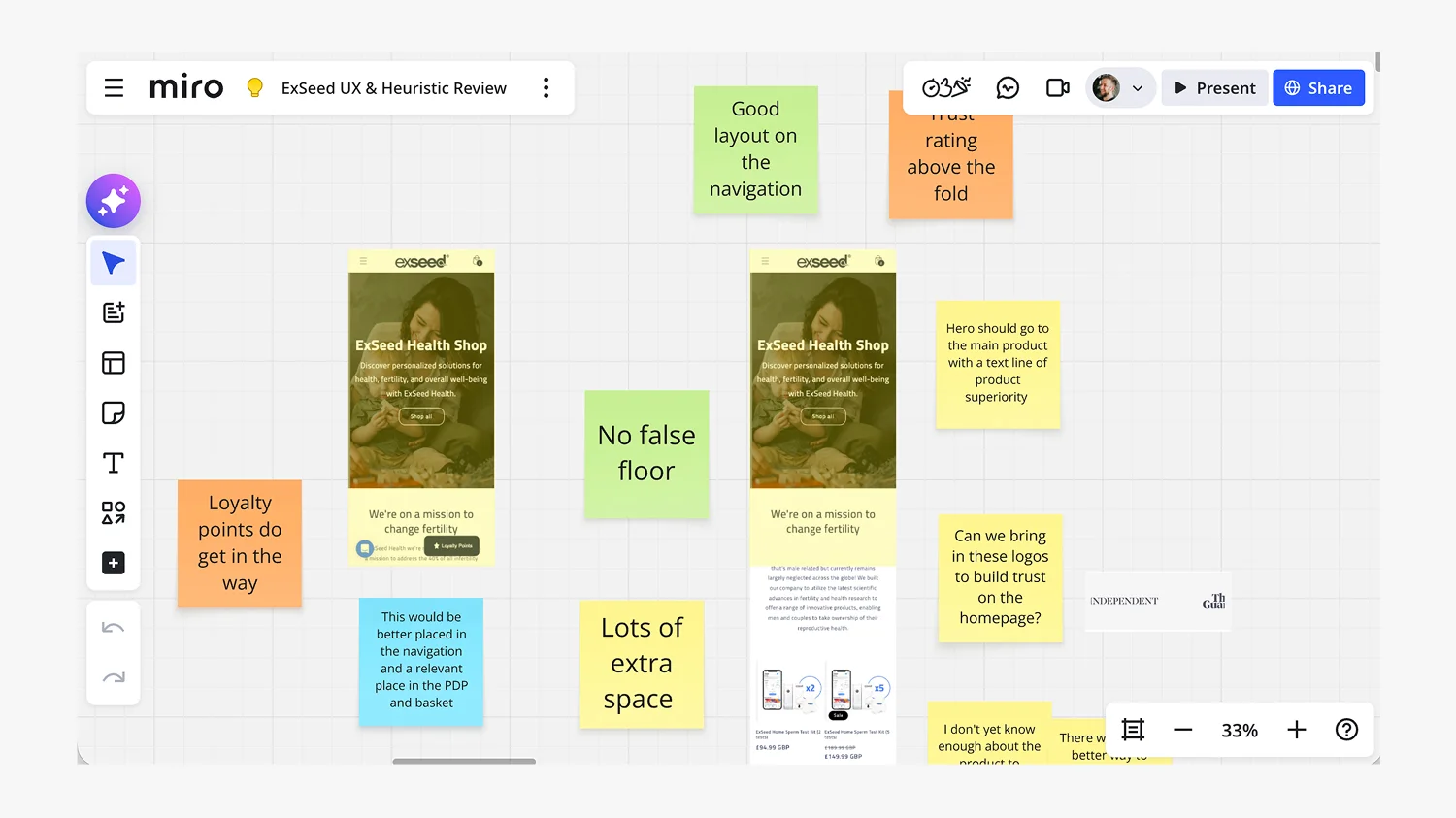
A Shopify UX review is where every project should start, and yet most agencies skip it in favour of made-up personas and assumptions. This article…
Shopify Expert
Ready to elevate your store? Start your Shopify transformation today
Bespoke Shopify and Shopify Plus design, led by one UX/UI & CRO Specialist
20+ years of brand and design experience
A trusted network of the best Shopify developers, Klaviyo and SEO specialists for larger builds
This site is protected by reCAPTCHA and the Google Privacy Policy and Terms of Service apply.
Get in touch

Registered in England & Wales No. 10575474. Based in Falmouth, Cornwall, UK.