

Introduction
A good conversion rate leads to increased revenue without the need for additional traffic. The average eCommerce conversion rate typically falls between 1% and 3%, but top-performing stores often achieve rates exceeding 5%. By implementing effective strategies, you can enhance your store’s performance and increase sales.
In this guide, we will explore actionable strategies to improve conversions and maximise your store’s success. I’m a Shopify Expert specialising in UX and conversion design, and below I’ll walk through the exact areas I focus on when auditing a store. I will highlight a recent success story of Shopify conversion rate optimisation (CRO) for Zen Maitri, where not only did the conversion rate increase, but customer engagement and page scrolling percentages improved as well.
1. Improve Your Website Speed
Slow-loading websites drive visitors away. For Shopify stores, it’s important to load within 3 seconds to achieve the best results.
Why Speed Matters
– 53% of users abandon websites that take longer than 3 seconds to load.
– Faster websites rank better on Google, which improves organic traffic.
Quick Fixes
– Use Shopify’s free Online Store Speed Report
– Compress your images with free tools like TinyPNG or Crush.pics.
– Reduce the number of apps your site has running in the background.
– Choose a lightweight, optimised Shopify theme like Dawn.
Example
When I redesign websites, I always use Dawn as a starting point. It’s lightweight, fast, and built with Shopify’s best practices in mind.
Many themes come with excessive functionality and sections that don’t suit every niche or sector. For example, a fashion-focused theme might include a “Shop the Look” section, which would be irrelevant for a grocery store.
Creating bespoke sections tailored to your business will enhance the user experience while keeping the theme lean and efficient—resulting in a faster, more optimised site.
Check out the Window Fleur Case Study which was built using Dawn as a starting point.
2. Optimise Product Pages
Your product pages should be clear, engaging, and persuasive to convert visitors into buyers.
Key Enhancements
– High-quality product images and videos. Use multiple angles and lifestyle shots.
– Detailed, benefit-driven product descriptions. Highlight what makes your product unique.
– Clear pricing, shipping, and return information. No hidden costs!
– Customer reviews and testimonials. Social proof boosts trust and conversions.
One often-overlooked element on product pages is helping customers compare options. Here’s how product comparison UX can reduce choice overload and lift conversions.
For a deep dive into creating high-converting product pages, check out Shopify’s guide to product pages.
Example
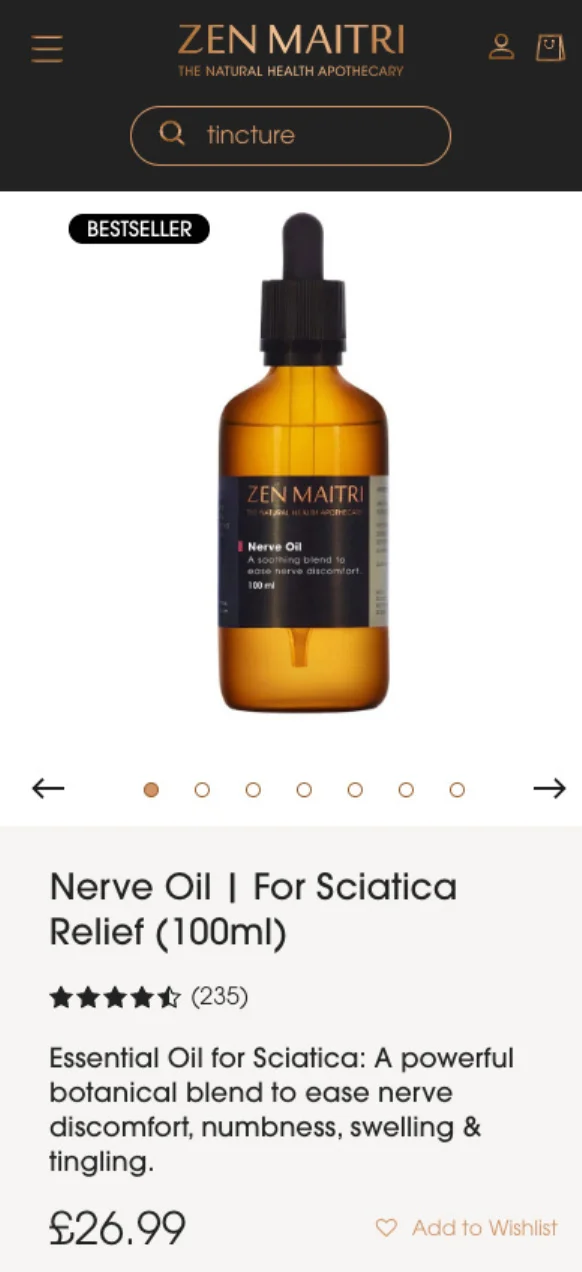
Before
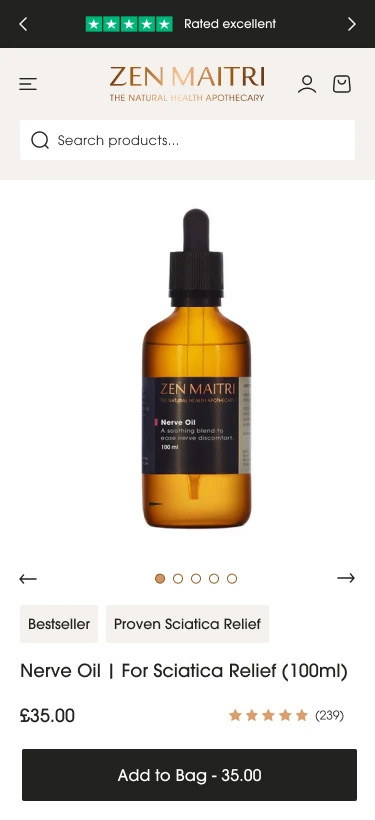
After custom CRO work
The product page required some enhancements, including a design tweak for improved visual calmness, as there were too many styles and backgrounds competing for attention.
It was essential to establish a clear hierarchy instead of overwhelming the user with too much information above the fold.
I decided to place the Trustpilot rating at the very top to build trust from the outset. Following that, I included the key elements—product image, title, price, and review rating—on the initial screen, along with a sticky “Add to Cart” button.
This layout provides users with all the essential information they need before they scroll down. The rest of the page features a clear content hierarchy, utilising bullet points and call-outs to assist readers in scanning the information. Additionally, more detailed information is housed in accordions for easy access.
Take a look at the final product page for Zen Maitri Nerve Oil.
3. Simplify the Checkout Process
A complicated checkout is one of the biggest conversion killers. Reducing friction can lead to more completed purchases.
How can you simplify the checkout process?
– Enable Shopify’s one-page checkout for faster purchases.
– Offer guest checkout to avoid unnecessary sign-ups.
– Display multiple payment options, including Apple Pay, Google Pay, and Klarna.
– Reduce checkout fields to the essentials.
For best practices, check out Baymard Institute’s research on checkout optimisation.
Example
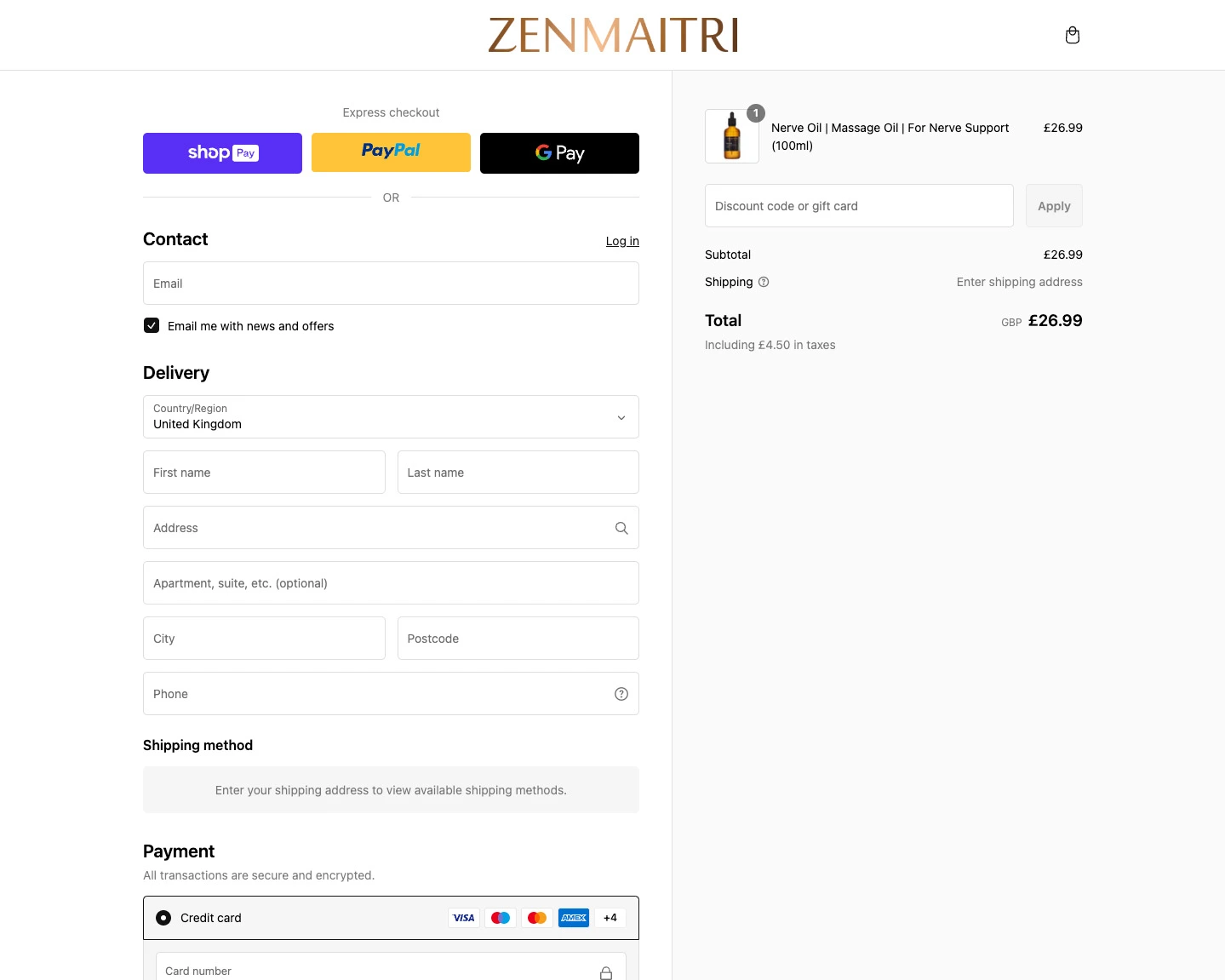
The Zen Maitri checkout has the 1 page checkout enabled. Allowing the user to scroll through the entire checkout in one go. Even easier if you are like me and have the autofill set up on your device.
4. Build Trust with Social Proof
People trust real experiences from other buyers. 79% of consumers trust online reviews as much as personal recommendations.
Ways to add trust
– Display customer reviews using apps like Judge.me or Loox.
– Showcase trust badges (secure checkout, money-back guarantee, etc.).
– Add an “As Seen In” section featuring press mentions or influencer partnerships.
– Offer a solid money-back guarantee to reduce purchase hesitation.
The small design details that reinforce trust, like cart animations, sticky add-to-cart buttons, and progress indicators, fall under the broader topic of microinteractions. Read more about how they improve the Shopify purchase journey.
Example

Zen Maitri use the Loox platform which utilises video reviews.
Some key takeaways for having video reviews
– Testimonial videos on sales pages increase conversions by 80%.
– Around 72% of customers trust a brand more with positive video testimonials and reviews.
– Research shows that company websites with video content are 53 times more likely to appear on Google’s first page.
5. Offer Free Shipping & Clear Return Policies
Many customers abandon their cart when they see unexpected shipping costs. 48% of shoppers say free shipping influences their buying decisions.
What You Can Do
– Offer free shipping (either sitewide or above a certain amount).
– Clearly state your return and refund policy on product pages.
– Use urgency tactics like “Limited stock” or “Only 2 left in stock.”
– Offer a simple return process—Shopify’s guide to return policies provides best practices.
Example

For the Zen Maitri Store I brought in the Free shipping threshold right next to the add to cart button. Then the more in-depth shipping information is in the accordion so the user doesn’t have to go off the page to find out more.
The Rebuy App has also been utilised in the cart so there is a clear message if you have hit the free shipping threshold. The bonus with this app is that you can have different levels to hit. First level is free shipping, second level is for a free gift. This is a great way to boos the average order value.
Check out the Delli website for a great example of well placed delivery messaging and the upsells in the cart.
6. Leverage Email & SMS Remarketing
Not all customers buy on their first visit. Retarget them effectively to bring them back.
Tactics to try
– Send abandoned cart emails using Shopify Email or Klaviyo.
– Use SMS marketing tools like Postscript to send reminders and exclusive discounts.
– Offer first-time buyer discounts through pop-ups.
– For more on abandoned cart recovery, read Shopify’s blog on abandoned carts.
7. Personalise the Shopping Experience
Personalisation makes customers feel valued and can increase conversion rates significantly.
Ways to do this
– Use product recommendation apps like LimeSpot to show “Recommended for You” products.
– Shopbox takes AI to the next level, integrating personalisation at every touchpoint—from a dedicated Shopify section to a chatbot-style button and even fully tailored emails.
– Enable personalised discount pop-ups based on user behaviour.
– Implement a chatbot (like Tidio) to offer real-time support.
Want expert help optimising your Shopify store?
A high conversion rate isn’t just about having great products—it’s about optimising every step of the customer journey. From site speed and product pages to checkout flow, trust signals, and retargeting efforts, each element plays a role in turning visitors into loyal customers.
If you’re ready to grow your Shopify store, a UX audit is a great place to start. I begin by analysing your Google GA4 data, then walk through the entire purchasing journey with real user behaviour in mind. Using a Miro board, I annotate screenshots with insights on what’s working, what’s not, and actionable ideas to improve conversions. Read more about my process and how you could work with a Shopify conversion rate optimisation expert. For a deeper read on why conversion optimisation is still fundamentally a human discipline, read this article on why CRO can’t be automated.
Would you like a UX & Heuristic Review of your site? Then Let’s chat!
What the client said
It has been such a pleasure to work with Anthony. We are a premium health and wellness brand and we were looking to do a revamp of our website to make it more user friendly, cleaner and sleeker. We were introduced to Anthony through a colleague. Anthony is a careful listener and he immediately grasped what we were trying to do. He has an incredible eye for design and functionality, two skills that you rarely find in the same person. We were also impressed by how data driven Anthony was: the first thing he did was do an analysis of our website to identify click rates and where page views were dropping off. This analysis allowed us to figure out where exactly our priorities need to be. We were extremely pleased with the end result and we would not hesitate to recommend Anthony. He has become our go to for all things UX related. Thank you Anthony!
Jaideep Shah | Zen Maitri Director
Frequently Asked Questions
The average Shopify store converts at around 1.4%, but the top 20% of stores convert at 3.3% or above. A “good” conversion rate varies by industry — fashion and apparel often sits lower (around 1–2%) while subscription or consumable products can reach 4–5%. Rather than benchmarking against a single number, the goal is consistent improvement on your own baseline.
The most frequent culprits are slow page speed (especially on mobile), unclear product pages that don’t answer buyer objections, a complicated or untrustworthy checkout experience, and weak or absent social proof. In most stores I audit, the biggest issue isn’t any single thing — it’s several small friction points adding up throughout the customer journey.
Even a 0.5% improvement in conversion rate can make a significant difference to revenue. If your store does £50,000 a month in revenue at a 1.5% conversion rate, getting to 2% would increase revenue by roughly £16,700 a month without changing your traffic at all. This is why CRO often has a better ROI than increasing ad spend.
Yes, significantly. Research consistently shows that a one-second delay in page load time can reduce conversions by up to 20%. On mobile, where the majority of Shopify traffic now comes from, this effect is even more pronounced. Slow themes, unoptimised images, and too many installed apps are the most common causes on Shopify stores.
A/B testing is valuable, but only once you have enough traffic to generate statistically significant results — typically at least a few thousand sessions per month per test. For smaller stores, making informed design and copy improvements based on user behaviour data (heatmaps, session recordings) is usually more effective than trying to run formal tests with insufficient traffic.
UX (user experience) design focuses on making your store intuitive and enjoyable to use. CRO (conversion rate optimisation) focuses specifically on removing barriers to purchase. In practice, they overlap significantly — good UX tends to improve conversion, and CRO work often identifies UX problems. The distinction matters more in theory than in practice for most Shopify stores.
Quick wins — like improving product page copy, adding trust signals, or fixing mobile layout issues — can show measurable results within 2–4 weeks. Structural changes like redesigning the checkout flow or rebuilding navigation take longer to implement and test. Most stores see meaningful improvement within 60–90 days of a focused CRO engagement.

This article was written by Anthony Bliss, a Shopify Expert & Freelance Shopify Designer specialising in UX and UI design for DTC brands. With 20+ years of design experience and 6+ years focused exclusively on Shopify, Anthony helps brands create stores that convert.
Shopify Success Stories

Shopify Migration with Custom & Conversion focussed UX
Drink Finder

Bespoke Shopify Subscription UX and UI and design system
Fuzzball

A fresh mobile-first design system and bespoke product page UX
Hartnack & Co
More Shopify Articles

Shopify Pricing 2026: What Does Shopify Actually Cost?
If you're looking at Shopify for the first time, the pricing page looks fairly straightforward. Pick a plan, pay monthly, done. But after building…

What DTC Brands Should Look for in a Shopify Designer
Direct-to-consumer brands operate differently from traditional ecommerce. You need higher conversion rates, better customer retention, and a store…

What is a Shopify Partner? (And Why It Matters in 2026)
If you're hiring a Shopify designer, developer, or agency, you'll probably see some mention they're a Shopify Partner. But what does that actually…
Shopify expert
Ready to elevate your store? Start your Shopify transformation today
Shopify expert who can help elevate your store to the next level
20 years of agency and direct client experience, without the high price tag
Network of the best developers, Klaviyo experts & SEO experts perfect for big projects
This site is protected by reCAPTCHA and the Google Privacy Policy and Terms of Service apply.
Get in touch
Registered in England & Wales No. 10575474. Based in Falmouth, Cornwall, UK.