

Introduction
Over the past couple of years, conversion rate optimisation has been wrapped up in AI hype. Tools promise automated insights, instant A/B tests, and machine-led optimisation that supposedly removes guesswork entirely.
For Shopify brands, this raises an obvious question.
If AI can analyse behaviour faster than humans, is CRO still a human skill?
After working on Shopify stores for brands ranging from fast-growing independents to established names, and spending years refining my approach as a Shopify Expert based in the UK, I believe the answer is very clear. Conversion rate optimisation is still fundamentally human. In many ways, it has become more human as automation increases.
AI can support CRO. It cannot replace judgement, experience, or a deep understanding of user behaviour. Those are the things that actually drive meaningful, long-term results on Shopify.
1. What Conversion Rate Optimisation Really Is
Before looking at AI, it’s worth clarifying what CRO actually means in practice.
True conversion rate optimisation is not about chasing percentage lifts for the sake of it. It is about reducing friction, increasing clarity, and helping users feel confident enough to complete an action.
On Shopify, that usually means:
-
Making products easier to understand
-
Reducing uncertainty around pricing, delivery, and returns
-
Improving navigation and product discovery
-
Removing unnecessary steps in key journeys
-
Reinforcing trust at critical decision points
These improvements sit at the intersection of UX, psychology, design, and brand. Data informs them, but data alone does not create them.
This is where AI-led CRO often struggles.
If you’re looking for hands-on Shopify conversion rate optimisation, take a look at how I approach it.
2. What AI Is Good at in CRO
AI tools have absolutely earned their place in modern CRO workflows.
Used properly, they are excellent at:
-
Analysing large volumes of session data
-
Highlighting patterns across heatmaps and recordings
-
Identifying where users drop out of funnels
-
Surfacing potential issues at scale
-
Speeding up analysis that would otherwise be time-consuming
For Shopify stores with meaningful traffic, these insights can be genuinely useful. They can help prioritise areas of investigation and flag problems early.
In my own process, analytics and behaviour tools are always part of the starting point. They give context and direction.
But they are not where decisions are made.
Where AI Product Recommendation Tools Genuinely Help
One area where AI has proven genuinely useful for Shopify stores is product recommendation and merchandising.
Used well, AI-driven recommendation tools can:
-
Surface relevant products based on browsing and purchase behaviour
-
Improve product discovery on large catalogues
-
Reduce time to first meaningful interaction
-
Support cross-sell and upsell without hard-coded rules
For stores with hundreds or thousands of SKUs, this can have a measurable impact on conversion rate and average order value. AI is very good at spotting patterns humans would struggle to identify at scale.
However, this only works when the underlying experience is sound.
AI can suggest what to show, but it does not understand how it should be shown.
The placement, presentation, tone, and timing of recommendations still require human judgement. Poorly positioned recommendations can feel pushy, confusing, or irrelevant, especially on mobile. Over-aggressive cross-sells can also damage trust and distract from the primary decision.
In practice, the best-performing Shopify stores use AI recommendations as an assistive layer, not a replacement for UX thinking. A human still decides:
-
Where recommendations appear in the journey
-
How many options are shown at once
-
How recommendations align with brand tone
-
When it is better to show reassurance instead of more products
When AI recommendations are guided by thoughtful UX and CRO strategy, they can meaningfully support conversion. Without that human layer, they often become noise.
3. The Gap Between Data and Understanding
AI excels at describing what users do.
It struggles to explain why they do it.
A heatmap might show users not scrolling past a certain point. AI may suggest moving content higher up the page. What it cannot tell you is whether the issue is hierarchy, messaging, trust, visual noise, or simple cognitive overload.
Similarly, AI might detect hesitation on a product page and recommend simplifying the layout. But simplification without understanding can easily remove reassurance instead of friction. Large-scale usability research from the Baymard Institute checkout usability research consistently shows that most checkout abandonment is caused by usability issues and uncertainty rather than obvious technical faults, reinforcing that understanding user behaviour requires interpretation, not just detection
On Shopify, this gap shows up constantly.
-
Pages that technically convert but weaken brand perception
-
Aggressive upsells that lift AOV but increase churn
-
Subscription flows that look efficient but feel confusing
-
Performance optimisations that remove emotional cues users rely on
These are not data problems. They are behavioural problems.
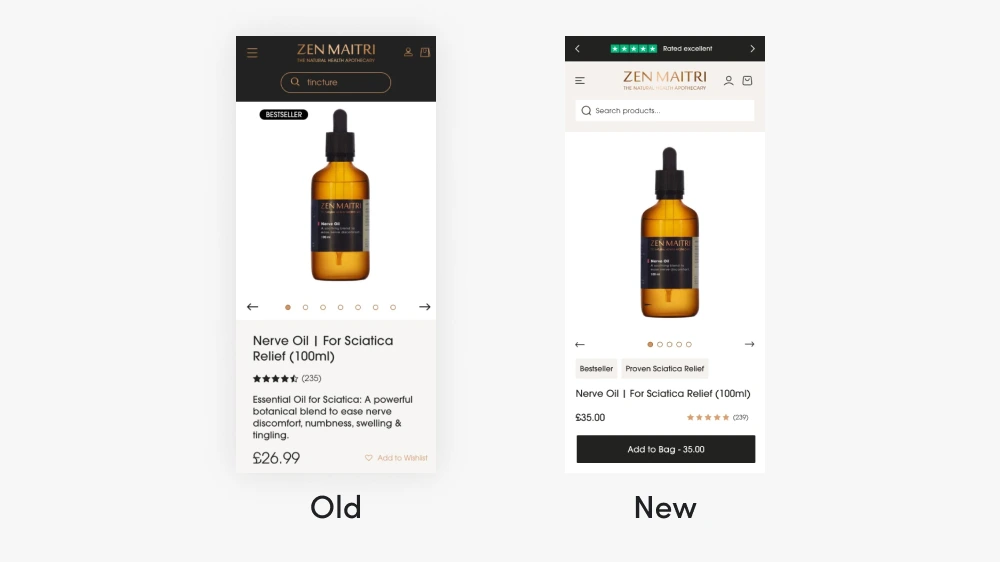
Here’s a before-and-after look at a mobile product page for Zen Maitri. By analysing user behaviour and applying targeted UX changes, we improved clarity, reduced friction, and boosted checkout performance.
4. CRO Is Behavioural Design, Not Button Testing
One of the biggest misconceptions around CRO is that it is primarily about testing colours, layouts, or CTAs.
In reality, most conversion issues stem from how users feel during a journey.
Common blockers include:
-
Uncertainty about what happens next
-
Fear of making the wrong choice
-
Lack of trust in the brand
-
Confusion caused by too many options
-
Mental effort required to understand the product
Decades of usability research from the Nielsen Norman Group have shown that cognitive load, uncertainty, and decision fatigue directly affect user behaviour, which is why effective CRO relies on empathy and design judgement rather than surface-level testing.
These are human responses. They require empathy, not automation.
A good CRO specialist reads between the numbers. They understand hesitation, anxiety, and motivation. They can spot when a user is pausing because they are thinking, not because something is broken.
AI cannot reliably do this.
5. Why Shopify CRO Needs Human Judgement
Shopify adds another layer of complexity that AI tools rarely understand properly.
Themes, apps, and platform constraints shape user experience in subtle ways. Many Shopify stores share similar layouts, which means small UX details carry more weight.
Human-led Shopify CRO considers things like:
-
Theme limitations versus user expectations
-
App overload and its impact on trust and speed
-
Mobile-first behaviour rather than desktop assumptions
-
When to customise and when to simplify
-
How brand tone influences confidence at checkout
For example, a premium brand often needs more explanation, not less. An AI tool may flag long pages as problematic, while a human designer recognises that reassurance is part of the conversion.
This is where experience with Shopify specifically matters.
You can explore more about this approach on my Shopify Conversion Rate Optimisation services page. If you’re also wondering what to look for in a specialist, it’s worth understanding what a Shopify Partner actually is and why it matters.
Even with limited theme options, strategic design decisions can create a bespoke, high-performing store. Understanding Shopify’s constraints allows us to optimise layouts, navigation, and conversions effectively.
6. AI Can Optimise for Conversion, Not Consequence
Another limitation of AI-led CRO is that it optimises for short-term metrics.
It can improve conversion rate in isolation, but it does not account for:
-
Long-term brand perception
-
Customer lifetime value
-
Retention and repeat purchases
-
Customer support burden
-
Trust erosion over time
A change that increases conversion by one percent may quietly increase returns, complaints, or churn.
Human-led CRO weighs these consequences. It asks whether a change aligns with the brand, not just whether it converts.
This is particularly important for subscription-based Shopify businesses, where retention matters far more than first-click conversion.
7. The Role of Prototyping and UX Thinking
One area where human CRO consistently outperforms automation is prototyping.
Rather than testing live changes blindly, I often design and validate solutions in Figma first. This allows stakeholders to review journeys, understand trade-offs, and align on intent before development.
AI tools do not prototype with intent. They test outcomes without context.
UX thinking adds structure to CRO. It connects data insights to design decisions, ensuring changes feel deliberate rather than reactive.
For a practical breakdown of the specific changes that move the needle, read the full guide on how to increase conversion rates on your Shopify store.
8. CRO Tools Are Assistants, Not Strategists
The healthiest CRO processes treat AI as a supporting tool, not a decision-maker.
Analytics highlight patterns. Session recordings reveal behaviour. AI helps process volume.
Humans decide:
-
What problem actually needs solving
-
Which changes align with the brand
-
Where to prioritise effort
-
When not to optimise at all
This balance is where the best results come from.
Even Google’s own Search Central guidance emphasises people-first, helpful experiences over automated optimisation, reinforcing that systems are designed to reward human-led quality rather than mechanical improvements.
9. Why Human-Led CRO Still Wins on Shopify
Across Shopify projects, the strongest results usually come from:
-
Understanding user intent before making changes
-
Reducing friction without removing reassurance
-
Improving clarity rather than adding features
-
Simplifying journeys without oversimplifying messaging
-
Aligning CRO improvements with brand positioning
These improvements rarely feel dramatic. They feel obvious in hindsight.
That is usually a sign they were designed by a human.
You can see examples of this approach in action on my Shopify case studies.
The micro-level design decisions — animations, feedback states, progress indicators — all feed into conversion. Read more on how microinteractions affect the Shopify purchase journey.
Conclusion: Conversion Rate Optimisation Has Never Been More Human
AI will continue to improve. CRO tools will become more sophisticated. Automation will remove inefficiencies.
But conversion rate optimisation is not just optimisation. It is communication, empathy, and design.
For Shopify brands that care about trust, longevity, and perception, CRO still requires human judgement. Tools can surface problems, but people solve them.
If you want to see how human-led CRO can transform your Shopify store, explore my Shopify Design Services. And if you’re in the process of finding the right person to work with, here’s what to look for when hiring a Shopify designer.
That is unlikely to change.
Frequently Asked Questions about AI & Shopify CRO
No. AI is replacing manual analysis, not strategic thinking. CRO specialists still interpret data, understand users, and design solutions. AI supports the process but does not replace human judgement.
AI can help identify issues and opportunities, especially on high-traffic stores. However, meaningful improvements usually come from human-led UX and design decisions rather than automated suggestions alone.
CRO focuses on improving outcomes such as sales or sign-ups. UX design focuses on usability, clarity, and experience. In practice, the two overlap heavily. The best CRO is grounded in strong UX principles.
No. A/B testing is a tool, not a strategy. Many conversion improvements come from understanding behaviour, reducing friction, and improving clarity without running constant tests.
Shopify stores often share similar structures, so small UX improvements can make a big difference. CRO helps brands stand out, build trust, and convert traffic more effectively within platform constraints.
Yes. Visual design and conversion performance are not the same thing. A store can look polished but still create friction or uncertainty that limits results.

This article was written by Anthony Bliss, a Shopify Expert & Freelance Shopify Designer specialising in UX and UI design for DTC brands. With 20+ years of design experience and 6+ years focused exclusively on Shopify, Anthony helps brands create stores that convert. In 2026 he won UK eCommerce Website of the Year and UK User Experience of the Year at the UK eCommerce Awards.
Let’s create your Shopify success story
Shopify Success Stories

Shopify Migration with Custom & Conversion focussed UX
Drink Finder

Headless to Shopify Migration with a Luxury Premium Theme Build
Thameen London

Bespoke Store Design with Key AOV Results and Rise in Revenue
East At Home
More Shopify Articles

What Is a Good Conversion Rate on Shopify?
A good Shopify conversion rate is above 3.2%, which puts a store in the top 20%. The average is 1.4%. Here is what the benchmarks actually say, why…

Two Wins from Four Shortlistings at the UK eCommerce Awards 2026
I won two categories at the UK eCommerce Awards 2026 from four shortlistings, for my work with Drink Finder and East at Home.
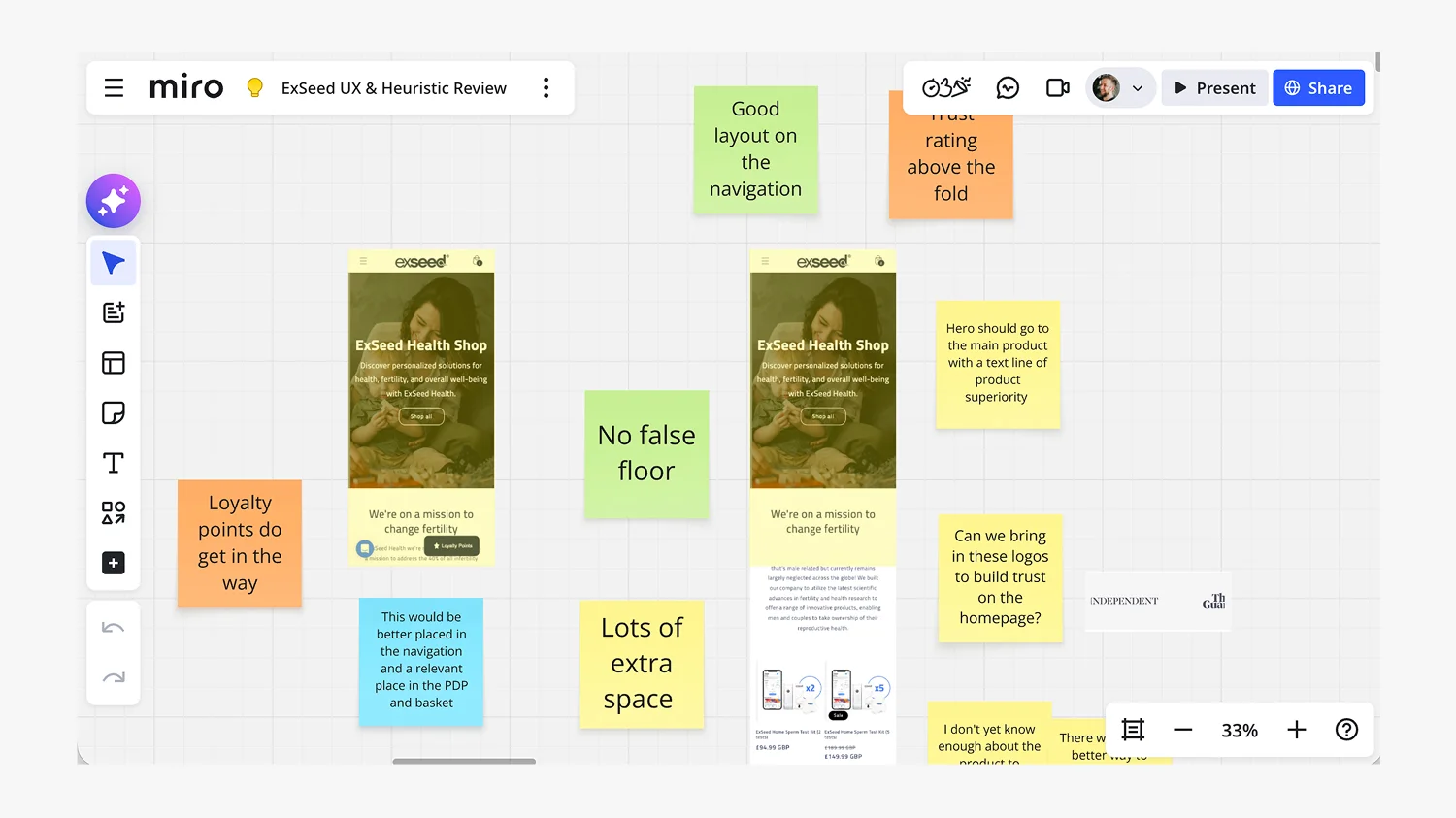
What Is a Shopify UX Review (And Why It’s Where Every Project Should Start)
A Shopify UX review is where every project should start, and yet most agencies skip it in favour of made-up personas and assumptions. This article…
Shopify Expert
Ready to elevate your store? Start your Shopify transformation today
Bespoke Shopify and Shopify Plus design, led by one UX/UI & CRO Specialist
20+ years of brand and design experience
A trusted network of the best Shopify developers, Klaviyo and SEO specialists for larger builds
This site is protected by reCAPTCHA and the Google Privacy Policy and Terms of Service apply.
Get in touch

Winner, UK eCommerce Awards 2026: UK eCommerce Website of the Year for Drink Finder, and UK User Experience of the Year for East at Home.
Registered in England & Wales No. 10575474. Based in Falmouth, Cornwall, UK.